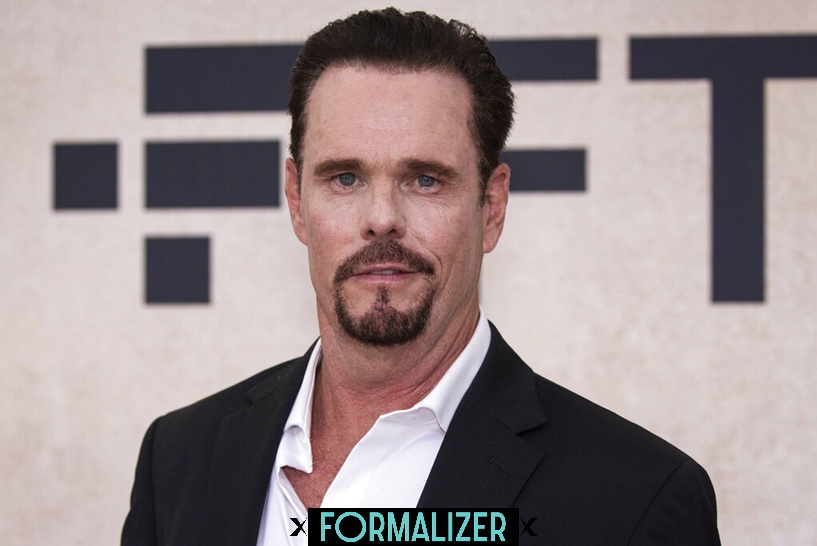

If you’ve landed here wanting a straight answer, here it is. Kevin Dillon net worth is estimated at approximately $10 million as of 2025. That fortune has been built across more than four decades in Hollywood — starting as a teenager in the early 1980s, breaking through in Oliver Stone’s Platoon, and ultimately reaching his financial and creative peak through eight seasons of HBO’s Entourage, where he reportedly earned up to $150,000 per episode and accumulated roughly $11 million from the TV series alone. Add a further $2 million for reprising his role in the 2015 Entourage film, and the numbers tell the story of a career that compounded quietly but consistently over time.
What makes Kevin Dillon’s financial journey interesting is not just the number at the end — it’s the road that led there. He spent nearly two decades doing solid work in films and television before landing the role that genuinely changed his life. Johnny “Drama” Chase didn’t just make him famous. It gave him an identity entirely his own, in an industry where he had spent years being introduced as Matt Dillon’s younger brother. The money followed the moment the character clicked — and it clicked in a way few supporting TV roles ever do.
Kevin Dillon — The Full Biography at a Glance
| Detail | Information |
|---|---|
| Full Name | Kevin Brady Dillon |
| Date of Birth | August 19, 1965 |
| Birthplace | New Rochelle, New York, USA |
| Raised In | Mamaroneck, New York |
| Nationality | American |
| Ethnicity | Irish, German, Scottish descent |
| Height | 5 ft 8 in (1.73 m) |
| Profession | Actor, Voice Actor |
| Famous Sibling | Matt Dillon (actor) |
| Career Start | 1983 |
| Breakthrough Film | Platoon (1986) — role of Bunny |
| Career-Defining Role | Johnny “Drama” Chase — Entourage (2004–2011) |
| Entourage TV Earnings | ~$11 million across 8 seasons |
| Peak Salary | ~$150,000 per episode |
| Entourage Film Earnings | ~$2 million (2015) |
| Awards | 3 Emmy nominations; 1 Golden Globe nomination |
| Ex-Wife | Jane Stuart (married 2006, divorced 2019) |
| Children | Amy Dillon (b. 1991), Ava Dillon (b. 2006) |
| Estimated Net Worth (2025) | ~$10 million |
Growing Up Dillon — A Family Wired for Creativity
To understand Kevin Dillon, you have to understand where he came from — because his background is unusually rich for someone who ended up playing a lovably struggling actor on a comedy series about Hollywood.
He was born on August 19, 1965, in New Rochelle, New York, the fifth of six children in the Dillon household. His father, Paul Dillon, wore multiple hats — portrait painter, sales manager, and eventually a golf coach at Fordham University. His mother, Mary Ellen, kept the household running. It was a working-class creative household, and the creative gene ran deep. On his father’s side, the family tree included Alex Raymond, the cartoonist who created Flash Gordon, and Jim Raymond, another professional cartoonist. Artistry wasn’t aspirational in the Dillon family — it was practically inherited.
Kevin grew up in Mamaroneck, New York, and by his own account, his original plan was to become a commercial artist. He enrolled at the School of Visual Arts in New York City after high school, pursuing that path with genuine intention. Then his older brother Matt’s career intervened in the best possible way.
Matt Dillon had broken out as a young actor in the early 1980s, and when Kevin attended the premiere of Matt’s 1982 film Tex, something clicked. He met Matt’s talent agent that night, made an impression, and secured his own representation. He was seventeen years old. The commercial art path quietly closed, and a four-decade acting career quietly opened.
The Early Years (1983–2003) — Two Decades of Groundwork
What followed that premiere night was a career that moved steadily rather than explosively. Kevin Dillon made his debut in the 1983 television movie No Big Deal, playing an uncontrollable teenage delinquent — a character type that would recur in his early work. He had a physicality and an edge that casting directors responded to, and the roles reflected it.
Heaven Help Us arrived in 1985, giving him a more substantial film role and wider recognition. But it was 1986 that changed everything for the first time. Oliver Stone was making Platoon, the Vietnam War film that would go on to win the Academy Award for Best Picture. Kevin was cast as Bunny — a volatile, frightening, darkly comic soldier who became one of the film’s most memorable supporting presences. He was twenty years old, working alongside Tom Berenger, Willem Dafoe, and Charlie Sheen, and holding his own in every scene. The performance announced that he was serious.
What followed over the next decade and a half was a body of work that demonstrated genuine range without ever quite breaking through to the A-list. He played the lead in The Blob remake in 1988 — a cult sci-fi horror film that earned him a new generation of fans. In 1991 he appeared in Oliver Stone’s The Doors, this time playing real-life Doors drummer John Densmore alongside Val Kilmer’s Jim Morrison. A Midnight Clear in 1992 showed his dramatic depth. No Escape in 1994 kept him in action territory.
On television, he built credibility through recurring roles — Officer Neil Baker on NYPD Blue from 1998 to 2002, and Paulie DeLucca on the CBS drama That’s Life from 2000 to 2002. These weren’t flashy roles, but they kept him working and visible, and they developed the comic timing that would eventually serve him so well.
Through all of this, he was making a living — a good one by most measures — but he was still, to much of Hollywood, Matt Dillon’s younger brother. That was about to change completely.
Entourage — The Eight Seasons That Built His Fortune
In 2004, HBO launched Entourage, a comedy series created by Doug Ellin and produced by Mark Wahlberg. The show followed fictional movie star Vinnie Chase and his crew of childhood friends navigating Hollywood — and one of those friends was Vinnie’s older half-brother Johnny Chase, a perpetually struggling actor clinging to former glories, convinced that his big moment was always just around the corner.
Johnny “Drama” Chase was, on paper, a comedic supporting character. In Kevin Dillon’s hands, he became something more — a fully realized, unexpectedly moving portrait of an actor who wanted it more than almost anyone, got it less than most, and kept showing up anyway. The character was pompous and insecure and egocentric and, somehow, completely lovable. Audiences didn’t just laugh at Drama. They rooted for him.
The show ran for eight seasons and 96 episodes, concluding in 2011. Over that run, Kevin Dillon’s salary grew steadily as the show’s cultural footprint expanded. Early seasons reportedly brought him around $80,000 per episode. By the show’s peak, that figure had risen to $150,000 per episode. When the numbers are totaled across the full run, his Entourage TV earnings come to approximately $11 million.
The awards recognition followed the audience response. He received nominations for the Primetime Emmy Award for Outstanding Supporting Actor in a Comedy Series in 2007, 2008, and 2009. He received a Golden Globe nomination for Best Supporting Actor in 2008. He never won, which is a genuine injustice in the opinion of many fans, but the nominations themselves confirmed what viewers already knew — this was a performance of real quality, not just reliable comic support.
Then in 2015, the Entourage film arrived. The whole cast returned, including Kevin, who reportedly earned $2 million for reprising Drama in the feature-length version. Combined with his television earnings, his total Entourage income across both the series and the film came to approximately $13 million — a figure that forms the financial backbone of everything he has built.
Kevin Dillon Net Worth — Where the Money Actually Comes From
| Income Source | Estimated Contribution |
|---|---|
| Entourage — TV series (8 seasons, 2004–2011) | ~$11 million |
| Entourage — 2015 feature film | ~$2 million |
| Early film career (1983–2003) | ~$1–2 million |
| Television roles pre/post Entourage | ~$1 million |
| Recent film work (Reagan, others) | Undisclosed |
| Real estate holdings | Undisclosed contribution |
| Endorsements and personal appearances | Minor |
| Estimated Total Net Worth | ~$10 million |
The net worth figure of $10 million — rather than the full $13+ million he earned from Entourage alone — reflects the realities of life in Hollywood. Taxes at the highest federal and California state rates take a significant portion of high earnings. Divorce proceedings, including reported spousal support payments of $10,000 per month following his 2019 split from Jane Stuart, represent ongoing financial obligations. The cost of maintaining properties in the Beverly Hills area and New York is substantial. And the years between big paychecks, which every actor experiences regardless of their resume, require reserves to bridge.
What remains after all of that is a $10 million net worth — genuinely substantial, carefully maintained, and the product of nearly four decades of professional consistency.
His Full Filmography in Brief
| Title | Year | Role | Medium |
|---|---|---|---|
| No Big Deal | 1983 | Arnold Norberry | TV Film |
| Heaven Help Us | 1985 | Ed Rooney | Film |
| Platoon | 1986 | Bunny | Film |
| The Blob | 1988 | Brian Flagg | Film |
| War Party | 1989 | Skitty Harris | Film |
| The Doors | 1991 | John Densmore | Film |
| A Midnight Clear | 1992 | — | Film |
| No Escape | 1994 | Casey | Film |
| NYPD Blue | 1998–2002 | Officer Neil Baker | TV Series |
| That’s Life | 2000–2002 | Paulie DeLucca | TV Series |
| Entourage | 2004–2011 | Johnny “Drama” Chase | TV Series |
| Poseidon | 2006 | — | Film |
| Hotel for Dogs | 2009 | — | Film |
| How to Be a Gentleman | 2011–2012 | Bert Lansing | TV Series |
| Entourage | 2015 | Johnny “Drama” Chase | Film |
| Reagan | 2024 | Jack L. Warner | Film |
Life After Entourage — The Quiet Continuation
When Entourage ended in 2011, Kevin Dillon did something that isn’t always easy for actors coming off a defining role — he didn’t panic. He didn’t chase the next big thing with visible desperation. He tried How to Be a Gentleman on CBS, which didn’t last, and then he largely stepped back from the spotlight to let the next chapter develop on its own terms.
That approach has something quietly admirable about it. Post-Entourage Hollywood can be unkind to actors whose signature role is so specific and so beloved that audiences struggle to see them as anyone else. Rather than forcing it, he waited for roles that genuinely interested him.
Reagan in 2024 represented a meaningful step — playing Jack L. Warner, the legendary Hollywood studio boss, in a biographical film about the 40th President. It was a substantial historical role that showed both ambition and range, and it suggested that the next phase of his career might carry more dramatic weight than anything since his early film work.
Off screen, he is known as a devoted surfer — a hobby that has absolutely nothing to do with Hollywood and everything to do with keeping a sense of identity separate from the industry. He has two daughters: Amy, born in 1991 from a relationship he has kept private, and Ava, born in 2006 with his ex-wife Jane Stuart, a model and actress he married in April of that year and divorced in 2019.
Kevin and Matt Dillon — Two Brothers, Two Very Different Paths
It would be strange to write about Kevin Dillon without acknowledging the dynamic that shaped so much of his early career — and that his most famous role addressed so directly.
Matt Dillon, four years older, became a genuine movie star in his teens and twenties. His net worth is estimated at around $40 million, reflecting a career built on prestige films and leading-man roles. Kevin came up behind him, spent years in his shadow, and eventually built something that was entirely and undeniably his own.
The irony that his career-defining character was essentially a man living in the shadow of a more successful younger relative — Vinnie Chase, in the show’s fiction — is not lost on anyone who knows the real backstory. Whether that parallel was intentional or accidental, it gave Kevin’s performance a layer of emotional authenticity that pure acting alone rarely produces. Drama’s hunger, his insecurity, his fierce loyalty, and his refusal to give up felt real because in some ways they probably were.
Conclusion
Kevin Dillon net worth of $10 million is the result of something rarer than talent alone — it is the product of persistence. Forty-plus years of showing up, taking the roles, building the craft, surviving the lean periods between big breaks, and then making the absolute most of the one that finally arrived in the form of a pompous, lovable, perpetually almost-famous character named Johnny Drama. That character gave him financial security and creative immortality in equal measure. And with recent work like Reagan suggesting he still has important chapters ahead of him, the story that built that $10 million doesn’t feel anywhere close to finished.