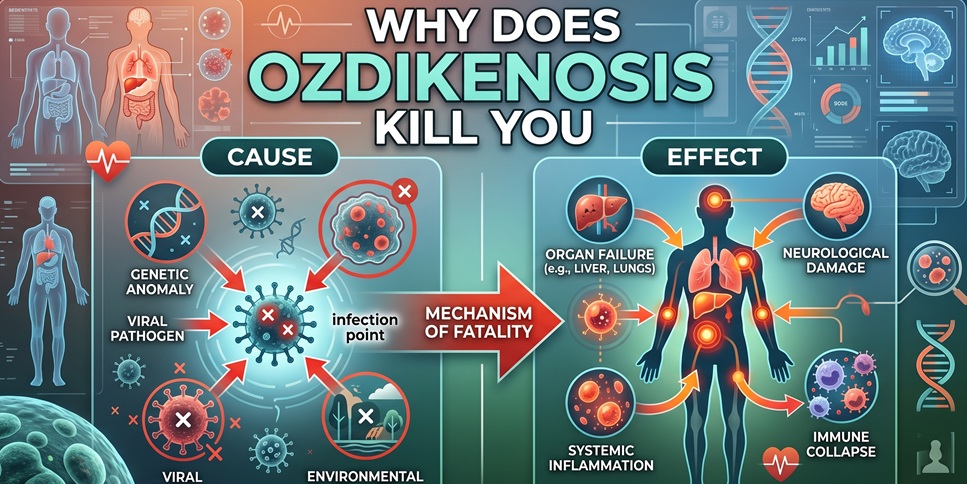

If you’re searching why does ozdikenosis kill you, the most important thing to understand is this: there is no medically recognized disease called ozdikenosis. It does not appear in clinical research, medical textbooks, or official health databases.
So the direct answer is simple—ozdikenosis does not kill you because it is not a real, documented medical condition. The term is most likely a misunderstanding, misspelling, or an internet-created phrase that has spread without scientific backing.
However, the reason people are asking this question is still important. Many online users associate the term with severe or fatal symptoms, which creates confusion and fear. This article explains where that confusion comes from and what real medical science says.
What Is Ozdikenosis?
“Ozdikenosis” does not have an official definition in medicine. It is not listed in:
- World Health Organization (WHO) disease classifications
- Medical journals or research databases
- Standard diagnostic manuals
This suggests that the term may have originated from:
- Online forums or social media
- Misheard or misspelled medical terminology
- Fictional or exaggerated health discussions
In many cases, unfamiliar or complex medical terms get distorted when shared online, leading to the creation of entirely new words that sound real but are not.
Is Ozdikenosis a Real Disease or a Misunderstanding?
Based on available evidence, ozdikenosis is not a real disease. There is no scientific proof, no clinical diagnosis criteria, and no documented cases.
This raises an important point about how misinformation spreads. A term can appear convincing simply because:
- It sounds scientific
- It is repeated across platforms
- It is linked to serious symptoms
People often assume that if something is widely discussed, it must be real. But in medicine, verification matters more than popularity.
Why People Think Ozdikenosis Is Deadly
Even though the condition itself is not real, the belief that it is deadly comes from several factors.
Fear of Unknown Illnesses
Humans naturally fear what they do not understand. A strange name like “ozdikenosis” can trigger concern, especially when paired with severe symptoms.
Viral Spread of Information
Social media platforms can rapidly spread unverified claims. Once a few posts suggest that something is dangerous or fatal, others repeat it without checking facts.
Misinterpretation of Symptoms
Sometimes, real symptoms of serious diseases are incorrectly labeled under a fake name. This creates the illusion that the fake condition is deadly.
Conditions That Might Be Confused With Ozdikenosis
People searching about ozdikenosis may actually be referring to real medical conditions. Some diseases that are often misunderstood or misrepresented include:
- Severe infections (such as sepsis)
- Neurological disorders
- Autoimmune diseases
- Rare genetic conditions
These are real and potentially serious illnesses, but they are properly documented and diagnosable—unlike ozdikenosis.
How Real Deadly Diseases Affect the Body
To understand why the idea of a “fatal disease” is believable, it helps to look at how actual life-threatening conditions work.
Organ Failure
Serious illnesses can damage vital organs such as the heart, lungs, or kidneys. When these organs stop functioning properly, survival becomes difficult.
Immune System Overreaction
In some cases, the body’s immune system reacts too strongly, causing widespread inflammation. This can harm healthy tissues and lead to complications.
Lack of Timely Treatment
Many diseases become dangerous when they are not treated early. Delays in diagnosis or care can increase the risk of severe outcomes.
These mechanisms explain why real diseases can be fatal—but they do not apply to a non-existent condition like ozdikenosis.
Symptoms People Associate With Ozdikenosis
Online discussions sometimes link ozdikenosis to symptoms such as:
- Severe fatigue
- Breathing problems
- Pain or discomfort
- Neurological issues
However, these symptoms are not unique and can be associated with many real conditions.
The danger lies in mislabeling these symptoms under a false diagnosis instead of seeking proper medical evaluation.
Table: Real vs Misinterpreted Symptoms
| Claimed Symptom | Medical Reality | Possible Real Condition |
|---|---|---|
| Extreme fatigue | Common symptom | Viral infections, anemia |
| Breathing difficulty | Serious warning sign | Asthma, pneumonia |
| Chest pain | Requires urgent care | Heart conditions |
| Confusion or dizziness | Neurological symptom | Stroke, dehydration |
This table shows that symptoms often linked to ozdikenosis are actually signs of real, diagnosable conditions.
Can Ozdikenosis Actually Kill You?
The clear and factual answer is: No, ozdikenosis cannot kill you because it is not a real disease.
There are:
- No documented cases
- No clinical studies
- No medical recognition
Any claims suggesting otherwise are based on misinformation or misunderstanding.
Dangers of Believing Unverified Medical Information
Believing in unverified conditions can have real consequences.
Delayed Medical Care
If someone assumes they have a fake condition, they may ignore the actual cause of their symptoms.
Increased Anxiety
Reading alarming but false information can create unnecessary fear and stress.
Self-Diagnosis Risks
Without proper medical guidance, individuals may attempt to treat themselves incorrectly.
This is why accurate information is critical when it comes to health.
When to Seek Medical Help
Regardless of what you call a condition, certain symptoms always require attention:
- Difficulty breathing
- Severe or persistent pain
- Sudden confusion
- Chest discomfort
- High fever that does not improve
If any of these occur, it is important to consult a healthcare professional rather than relying on online speculation.
How to Verify a Medical Condition Online
To avoid misinformation, follow these steps:
- Check trusted medical sources
- Look for scientific studies or official recognition
- Avoid relying solely on social media
- Be cautious of unfamiliar terms with no clear definition
Reliable information is always backed by evidence—not just repetition.
FAQs
1. Why does ozdikenosis kill you?
It does not—there is no medical evidence that ozdikenosis exists as a disease.
2. Is ozdikenosis a real condition?
No, it is not recognized in medical science.
3. Why is ozdikenosis trending online?
It may be spreading due to misinformation or viral discussions.
4. What symptoms are linked to ozdikenosis?
Various symptoms are mentioned online, but they belong to real medical conditions, not ozdikenosis.
5. Can believing in fake diseases be harmful?
Yes, it can delay proper treatment and increase anxiety.
6. What should you do if you feel unwell?
Seek advice from a qualified medical professional for accurate diagnosis and care.
Conclusion
The question why does ozdikenosis kill you highlights how easily misinformation can spread, especially when it involves health. While the term may sound serious, the truth is straightforward—ozdikenosis is not a real disease, and it cannot cause harm on its own.
What matters is recognizing real symptoms and seeking proper medical advice when needed. In a world filled with information, the ability to separate fact from fiction is not just helpful—it is essential for your health and well-being.