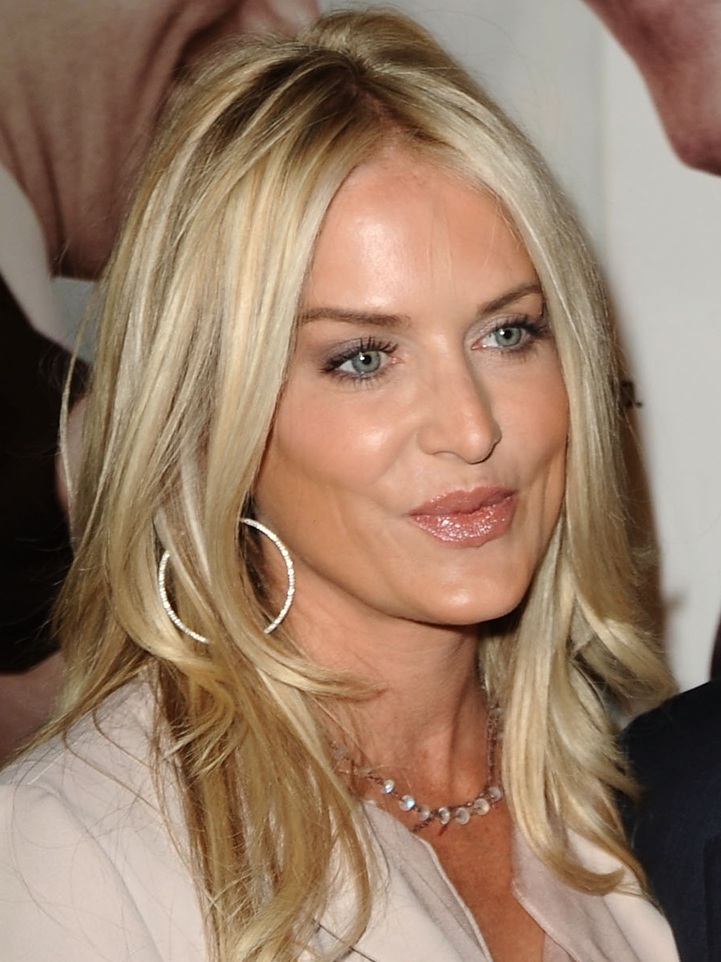
Kimberly Buffington: The Austin Homebuilder’s Daughter Who Survived Hollywood’s Most Frightening Medical Emergency

| Quick Facts | Details |
|---|---|
| Full Name | Kimberly Buffington (Kimberly Buffington-Quaid during marriage) |
| Date of Birth | October 17, 1971 |
| Birthplace | Austin, Texas, USA |
| Age (2026) | 54 years old |
| Nationality | American |
| Height | 5 ft 8 in (173 cm) |
| Father | Thomas B. Buffington — founder, Buffington Signature Homes |
| Mother | Delia Buffington |
| Siblings | Blake Buffington; Dow Wright; Robin Banister |
| Education | Hyde Park Baptist High School, Austin; University of Texas (graduate degree) |
| Career | Real estate professional — Buffington Signature Homes; started age 20; first-year highest sales recognition |
| Ex-husband | Dennis Quaid (b. April 9, 1950, Houston, Texas) — his third wife |
| Married | July 4, 2004 — Dennis’s ranch, Paradise Valley, Montana |
| Twins born | November 8, 2007 — fraternal twins via gestational surrogate; Cedars-Sinai, Santa Monica |
| Son | Thomas Boone Quaid (b. November 8, 2007) |
| Daughter | Zoe Grace Quaid (b. November 8, 2007) |
| Heparin overdose | November 18, 2007 — twins (10 days old) given 1,000× correct dose at Cedars-Sinai; both survived |
| Patient advocacy | Testified House Committee on Oversight, May 2008; Dennis made Discovery Channel documentaries |
| Divorce finalised | April 27, 2018 — after multiple filings, reconciliations, and a six-year process |
| Settlement | ~$2 million + property |
| Stepson | Jack Quaid (b. April 24, 1992) — actor, The Boys; Dennis’s son with Meg Ryan |
| Dennis’s 4th wife | Laura Savoie — married 2020 |
| Net Worth (est. 2026) | $3 million |
On November 8, 2007, at Cedars-Sinai Medical Center in Santa Monica, California, Kimberly Buffington and her husband Dennis Quaid became the parents of fraternal twins — a boy named Thomas Boone and a girl named Zoe Grace — born via gestational surrogate after the couple had pursued that path to parenthood following difficulties with traditional conception. The twins were healthy. The birth was, by every account of the day itself, exactly what the parents had hoped for after the sustained effort and the specific vulnerability of surrogacy’s extended process.
Ten days later, on November 18, 2007, a nurse at Cedars-Sinai administered heparin — a blood thinner commonly used in neonatal care — to the ten-day-old twins. She administered 1,000 times the correct dose.
Thomas Boone and Zoe Grace Quaid survived. The survival was not guaranteed in the hours immediately following the administration of the overdose. The specific physiological consequences of a heparin dose one thousand times beyond the therapeutic level in a ten-day-old infant are severe: the drug suppresses blood clotting so comprehensively that ordinary physiological processes can become life-threatening. The hospital’s medical team managed the overdose with the urgency it required, and both children recovered fully.
Kimberly Buffington and Dennis Quaid — the parents who had waited years for these children, who had navigated the surrogacy process together, who had been in the hospital that day believing the most dangerous part was already behind them — were left with the specific experience of a medical near-catastrophe whose cause was not disease or accident or genetic misfortune but a preventable human error in one of the world’s most prestigious hospital systems.

They did not simply absorb the experience privately. Dennis testified before a House committee on oversight. He made documentaries. They became patient safety advocates. And they continued the marriage for nearly another decade before the specific pressures of their life together eventually produced the long and complicated divorce that was not finalised until April 27, 2018.
The story of Kimberly Buffington contains all of this — and also, beneath it, the story of a woman from Austin, Texas, who grew up in a homebuilding family, began selling homes at twenty, built a professional identity in her own right, and has maintained a life of meaningful privacy before, during, and after the years in which the public record gave her almost no privacy at all.
Austin, Texas: The Buffington Family
Kimberly Buffington was born on October 17, 1971, in Austin, Texas — the capital city whose character is shaped by the University of Texas, the Texas state government, and the specific blend of Southern conservatism and creative counterculture that has made it one of the more culturally distinctive cities in the American South. She grew up in the specific world of Austin’s professional establishment — a world defined by her father’s identity as the founder of one of the city’s most significant private businesses.
Her father, Thomas B. Buffington, founded Buffington Signature Homes — Austin’s largest privately-owned homebuilding company, an enterprise whose decades of construction across the Austin metropolitan area made it a significant force in the city’s residential development landscape and whose family character — a private company, retained within the Buffington family rather than sold to a larger corporate entity — reflects the specific values of an entrepreneur who understood what he had built and chose to preserve it.
Her mother, Delia Buffington, raised Kimberly alongside three other siblings: Blake Buffington, Dow Wright, and Robin Banister — a family whose size and the specific informality of the Austin professional class’s domestic culture gave Kimberly a childhood shaped by both professional ambition and community rootedness.
She attended Hyde Park Baptist High School in Austin — the private school whose combination of Baptist values and strong academic programme served the specific segment of Austin’s professional community whose families prioritised faith-based education alongside university preparation. From Hyde Park Baptist she went to the University of Texas in Austin — remaining in her home city for her university education, which produced a graduate degree whose specific field is not documented in public sources but whose institutional prestige reflects the academic ambition of a young woman from a professionally accomplished family.
The decision to remain in Austin for university, and the professional trajectory that followed, reflect a person who was not in flight from her origins but actively building on them.
Buffington Signature Homes: A Career Built from Twenty
Kimberly Buffington began her professional career in new home sales at the age of twenty — working within the family enterprise that her father had built, in the specific domain of Austin residential real estate where her family name carried the weight of decades of community presence and professional reputation. Beginning at twenty is not, in the context of a family business, unusual — but succeeding at twenty, in a sales environment that requires the specific combination of product knowledge, client relationship skills, and competitive commercial instinct that real estate demands, is less automatic.
She received the highest sales recognition in her first year — a documented achievement that establishes her professional capability independent of the family connection. The highest sales recognition in a company where your father is the founder could theoretically reflect preferential attribution; in real estate, whose sales figures are objectively measurable by transaction value and volume, it reflects actual commercial performance.
Across her career at Buffington Signature Homes, she developed expertise in sales, marketing, advertising, interior design, and office design — the full range of capabilities that a senior real estate professional in a family homebuilding enterprise requires. The specific combination of design intelligence and commercial competence that this background represents is the professional identity that Kimberly has carried through the various chapters of her adult life — the chapter before Dennis Quaid, the chapter during their marriage, and the chapter that has followed the divorce’s eventual resolution.
The homebuilding family background is also, in retrospect, the clearest explanation for why Kimberly Buffington — unlike many people who marry Hollywood actors — has never been defined primarily by her ex-husband’s career. She had her own professional identity before the marriage and a family enterprise to return to after it. The specific financial and professional security that the Buffington family background provides is the foundation on which she has built her biography on its own terms.
July 4, 2004: The Montana Wedding
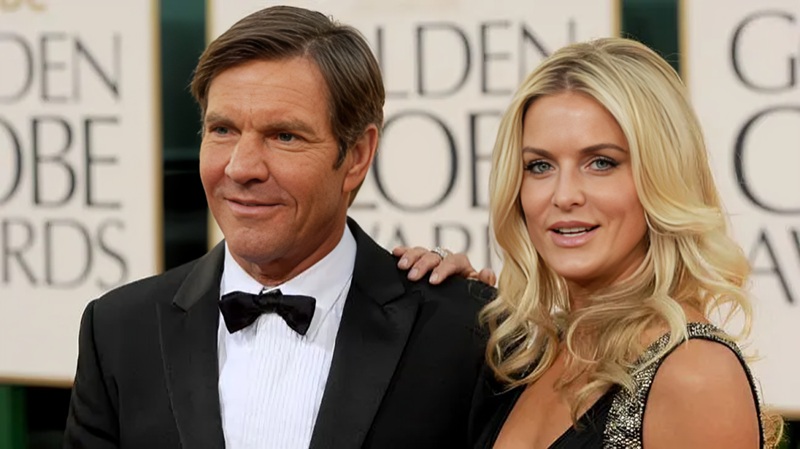
Dennis Quaid was born on April 9, 1950, in Houston, Texas — the city whose own specific character as a working-class, oil-industry, Southern Baptist community contributed to the formation of one of Hollywood’s most commercially versatile actors, whose career spans The Right Stuff (1983), The Big Easy (1986), Great Balls of Fire! (1989), Wyatt Earp (1994), The Rookie (2002), Far From Heaven (2002), and The Parent Trap (1998), among dozens of others.
He had been married twice before Kimberly: to actress P.J. Soles (1978–1983) and to Meg Ryan (1991–2001), whose marriage to Dennis produced their son Jack Quaid — born April 24, 1992, and subsequently known as a successful actor in his own right, most prominently as Hughie Campbell in Amazon’s superhero series The Boys. The Meg Ryan marriage ended after Dennis publicly acknowledged a cocaine addiction problem that had affected the marriage and that he had been in recovery from — a disclosure whose honesty was noted at the time as unusual and whose personal cost was considerable.
Kimberly and Dennis met in the early 2000s and married on July 4, 2004 — Independence Day — at Dennis’s ranch in Paradise Valley, Montana: a private ceremony in the specific atmosphere of the Montana landscape that reflects both Dennis’s ranching interests and the couple’s apparent preference for a celebration defined by natural setting rather than Hollywood visibility. Kimberly was thirty-two years old; Dennis was fifty-four — a twenty-two year age gap whose significance the couple declined to elaborate on publicly, having presumably assessed it for themselves.
The marriage received the standard celebrity wedding coverage without generating the sustained media narrative that marriages involving more publicly prominent figures typically produce. Kimberly’s professional and personal profile remained relatively modest in the public consciousness — present at events, noted in the social record, but not a constructed celebrity identity in her own right.
November 2007: The Twins, the Hospital, and the Overdose
Kimberly and Dennis pursued parenthood through gestational surrogacy — a decision that reflects either medical necessity or personal choice, and whose specific reasoning the couple never disclosed publicly. Surrogacy in California is legally well-supported, and Cedars-Sinai Medical Center in Santa Monica — where the twins were delivered — is one of the country’s leading medical facilities, whose neonatal care unit was the standard of care that the specific circumstances of a surrogacy birth appropriately engaged.
Thomas Boone Quaid and Zoe Grace Quaid were born on November 8, 2007, as fraternal twins. By all accounts, the birth was healthy and the initial days with the newborns were exactly what the parents had hoped for across the years of the surrogacy process.
On November 18, 2007 — ten days after the twins’ birth — a nurse at Cedars-Sinai administered heparin to the infants as part of standard neonatal care, to prevent blood clot formation in the intravenous lines used to deliver medication and fluids. The standard neonatal heparin dose is 10 units per millilitre. The dose administered was 10,000 units per millilitre — the adult concentration, one thousand times beyond the therapeutic level for a ten-day-old infant.
The error was discovered — fortunately — before the full consequences of the overdose became irreversible. The hospital’s medical team recognised the situation and administered Protamine sulfate, the antidote for heparin overdose, which reverses the drug’s anticoagulant effect. Both Thomas Boone and Zoe Grace received treatment and survived. The same error had been made with three other infants at Cedars-Sinai the same day — all treated with the same overdose through the same systemic failure in the hospital’s medication management.
The specific cause of the error was the presence of adult-concentration heparin vials in the neonatal medication environment — vials that were visually similar to the paediatric concentration vials and that the hospital’s labelling and storage systems had failed to differentiate adequately. It was a systemic failure rather than a singular individual error, and the subsequent investigation and remediation reflected that assessment.
Kimberly Buffington and Dennis Quaid’s response was, by any assessment of how celebrity parents have handled comparable situations, both courageous and consequential. They could have processed the experience privately, filed a lawsuit, and moved on. Instead, they chose to make the systemic failure public — not primarily as legal strategy but as patient safety advocacy.
Dennis testified before the House Committee on Oversight and Government Reform in May 2008, presenting the twins’ case as evidence of the specific failure modes in hospital medication management that endangered patients across the healthcare system. He subsequently made two documentaries for the Discovery Channel examining patient safety issues and the specific circumstances of the Cedars-Sinai overdose. The documentaries reached audiences that congressional testimony alone could not, and the advocacy they represented contributed to sustained attention to heparin labelling standards and neonatal medication safety protocols.
Kimberly was present throughout this advocacy — as the mother whose children had been endangered, as the partner in Dennis’s public campaign, and as the person whose own processing of the near-catastrophe was conducted, characteristically, with considerably less public visibility than her husband’s but with the same apparent commitment to the outcome.
Thomas Boone and Zoe Grace Quaid are eighteen years old as of 2026 — healthy, raised partly in Los Angeles and partly with the family connections that both parents maintained. Their survival is, in every sense, the most important fact of the entire episode.
The Six-Year Divorce: A Complicated End
The marriage between Kimberly Buffington and Dennis Quaid produced what might be described, with the specific understatement available to the facts, as a prolonged conclusion. The divorce process began in March 2012, was withdrawn in April 2012, resumed with a second separation in October 2012, resulted in Dennis filing in November 2012, produced a reconciliation in September 2013, generated a joint statement of divorce in June 2016, and was finally legally resolved when the divorce was finalised on April 27, 2018 — approximately six years and one month after the first filing.
The specific dynamics that produced this extended process are not documented in detail in the public record — neither party has provided a comprehensive account of what the various reconciliation attempts contained or why the final resolution took as long as it did. What the timeline reflects, at minimum, is a situation whose emotional and logistical complexity exceeded the standard celebrity divorce model, and whose resolution required sustained negotiation on multiple dimensions before both parties could conclude it.
The settlement of approximately $2 million plus property provisions was the financial resolution of a fourteen-year marriage that had produced two children, a shared experience of genuine parental terror and subsequent advocacy, and the full range of ordinary and extraordinary circumstances that fourteen years of any marriage contains.
Dennis Quaid married Laura Savoie in 2020 — a geology Ph.D. student at the University of Texas who was forty years his junior, whose relationship with Dennis had begun before the Kimberly divorce was finalised. The age gap in that relationship generated the kind of public commentary whose specific concerns are not dissimilar to those that attended, more quietly, the Kimberly marriage’s own twenty-two year age difference.
Life After Dennis: The Austin Return
Following the divorce’s finalisation, Kimberly Buffington has maintained the low public profile that has characterised her biography outside the specific celebrity contexts that marriage to Dennis Quaid created. She returned to a life centred on Austin and on the professional and family connections that the Buffington family background maintains.
She has not given interviews about the marriage or the divorce. She has not written or contributed to biographical accounts of the relationship. She has maintained a minimal social media presence consistent with the general approach to privacy that her biography reflects throughout.
Her children Thomas Boone and Zoe Grace are her primary biographical connection to the public record — the two eighteen-year-olds whose November 2007 birth and November 2007 medical emergency are the events that placed their mother most fully in the public eye, and whose subsequent lives are their own.
Net Worth: The Honest Picture
| Income Source | Estimated Contribution |
|---|---|
| Buffington Signature Homes real estate career | Primary professional income |
| Family business connection and assets | Significant family context |
| Divorce settlement — ~$2 million + property | Confirmed |
| Estimated Total Net Worth (2026) | $3 million |
The figure reflects Kimberly’s independent financial history — the professional income of a real estate career at one of Austin’s largest homebuilding enterprises, the divorce settlement, and the family business background that provides both professional context and some degree of financial stability. It is distinct from the Buffington family enterprise’s overall valuation and from Dennis Quaid’s separate net worth of approximately $30 million.
Conclusion
Kimberly Buffington was born in Austin, Texas, on October 17, 1971, the daughter of the founder of the city’s largest private homebuilding company. She began selling homes at twenty and received her company’s highest sales recognition in her first year. She married Dennis Quaid on the Fourth of July in Montana. She became the mother of twins via surrogacy who were then given a thousand times the correct heparin dose when they were ten days old. Both survived. She and Dennis testified before Congress and made documentaries about patient safety. She and Dennis divorced — eventually — after six years of filings, withdrawals, and reconciliations, with the divorce finalised in April 2018. She returned to Austin and to the private life that her biography, before and after the Hollywood years, has always been oriented toward.
Thomas Boone and Zoe Grace Quaid are eighteen years old. They survived the Cedars-Sinai heparin overdose and grew up into the teenagers, and now young adults, whose birth was the best day of their parents’ lives and whose near-death, ten days later, was the worst. The advocacy that followed that worst day may well have saved lives that neither parent will ever know about — which is, in its own quiet way, the most complete account available of what Kimberly Buffington and Dennis Quaid did with the most frightening thing that ever happened to them.