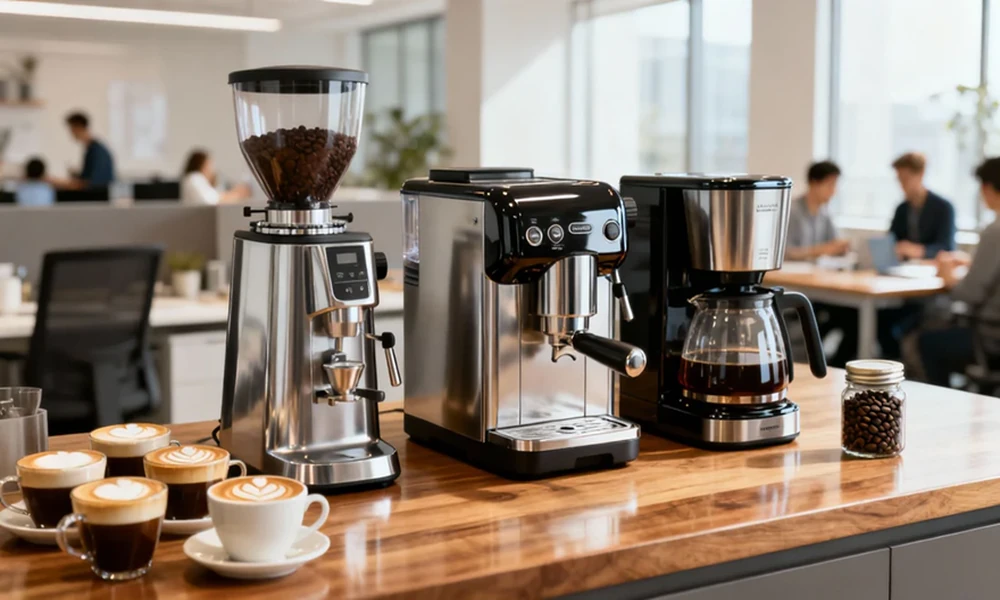

A shared office pantry sees far heavier and more varied use than any home kitchen, which is exactly why hygiene and maintenance considerations deserve at least as much weight as taste or drink variety when selecting a commercial coffee machine for that space.
Why Shared Equipment Needs Different Standards
A machine used by one household might get cleaned whenever someone thinks of it, but a pantry unit touched by dozens or hundreds of employees daily needs a structured cleaning regimen simply because the margin for neglect is so much smaller. Bacteria and mould thrive in warm, moist environments like milk lines and drip trays, and a machine that isn’t cleaned on schedule can become a genuine hygiene issue well before most staff would notice anything wrong with the taste. This is one of the more overlooked aspects of pantry equipment planning, since most buying decisions focus on flavour and speed rather than the cleaning demands sitting behind those features.
Milk System Hygiene in Detail
Milk-capable machines carry the highest hygiene risk of any commercial coffee equipment, because milk residue left in internal lines creates ideal conditions for bacterial growth within hours, not days. Look specifically for machines with automated milk line rinsing that runs between uses, along with removable components that allow for a genuine deep clean rather than sealed internal tubing that can only be flushed and never properly inspected. Providers offering scheduled servicing typically build milk system deep-cleaning into their regular maintenance visits, which matters enormously for offices without the internal discipline to enforce daily cleaning routines themselves.
Descaling and Water System Maintenance
Singapore’s water carries enough mineral content that scale builds up steadily inside any machine’s internal water paths, affecting both taste and mechanical performance over time. A machine left undescaled for too long doesn’t just produce worse coffee; it puts additional strain on pumps and heating elements that can shorten the equipment’s working life. Commercial machines built for office use typically include built-in filtration systems designed to slow this buildup, and pairing that with a proper descaling schedule keeps a machine performing at its intended standard for years rather than months.
Grinder Maintenance for Bean-to-Cup Units
Grinders accumulate oil residue and stale coffee particles over time, which affects both flavour consistency and, if left unaddressed, can eventually jam the mechanism entirely. Regular grinder cleaning, distinct from general machine cleaning, is a maintenance task that’s easy to overlook because it doesn’t show obvious symptoms until the problem has already progressed. This is one of several reasons commercial machines benefit from professional servicing rather than relying on general office staff to identify and address wear before it becomes a bigger issue.
Choosing Equipment Built for Sustained Commercial Use
Not every machine marketed for offices is genuinely built to commercial specifications, and it’s worth distinguishing between a prosumer unit repackaged for office sale and equipment actually engineered for continuous daily use by large groups. Commercial-grade internals, including more robust pumps, larger water tanks, and components rated for higher cycle counts, hold up meaningfully better under office demand than consumer equipment pushed beyond its intended use case. Browsing a dedicated commercial range, such as what’s listed under Daiohs’ coffee machine offering, gives a clearer sense of what genuinely commercial-grade specifications look like compared to consumer equipment marketed toward small offices.
Documenting the Routine So It Survives Staff Turnover
A cleaning and maintenance routine that lives only in one person’s head tends to quietly lapse the moment that person changes roles or leaves the company, which is why it’s worth writing the routine down, even briefly, as part of onboarding whoever takes over pantry responsibilities. A simple written checklist outlasts individual staff turnover in a way an informal habit never does, and it gives a new office manager something concrete to follow rather than reconstructing the routine from scratch or, worse, not realising one was ever needed.
Building a Maintenance Routine Around the Machine You Choose
Once a machine is selected, pantry hygiene depends on having a clear routine in place, whether that’s internal daily cleaning tasks assigned to a rotating staff member or a service contract that handles this professionally on a fixed schedule. Offices that skip this step, regardless of how good the machine itself is, tend to see hygiene and performance issues creep in within months rather than years.
Assigning Clear Ownership Inside the Office
Even a well-serviced machine benefits from having one identifiable person, rather than a vague sense of shared responsibility, who notices when something seems off and knows who to call about it. Diffuse ownership tends to mean small issues, a slower drip, a faint smell from the milk wand, get silently tolerated for weeks because nobody feels it’s specifically their job to flag it. Naming an actual point of contact, even informally, closes that gap and tends to catch developing problems while they’re still minor and inexpensive to fix rather than after they’ve progressed into something that affects the whole pantry.
What to Ask a Provider About Hygiene Practices Directly
Before committing to a machine or a servicing contract, it’s worth asking a provider directly how often milk systems are deep-cleaned, what descaling schedule they follow, and whether these tasks are documented or simply assumed to happen. A provider with a genuine hygiene process should be able to answer these questions specifically rather than offering a vague assurance that the machine is well maintained, and the clarity of that answer often says as much about the provider’s overall reliability as anything else in the sales conversation.
Selecting a commercial coffee machine for an office pantry means thinking beyond taste and drink variety to the hygiene and maintenance demands that come with heavy shared use, since getting this part right protects both the equipment’s lifespan and the health of everyone who relies on it daily.