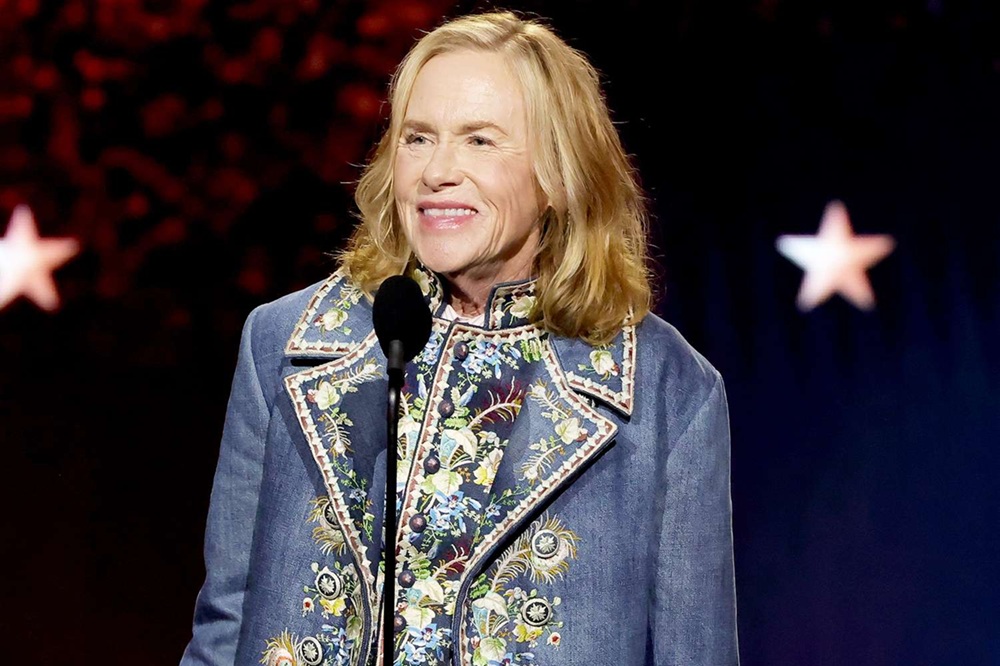

| Quick Facts | Details |
|---|---|
| Full Name | Amy Marie Madigan |
| Date of Birth | September 11, 1950 |
| Birthplace | Chicago, Illinois, USA |
| Age (2026) | 75 years old |
| Height | 5 ft 4 in (163 cm) |
| Nationality | American |
| Religion | Catholic — third-generation Irish American |
| Father | John J. Madigan (1918–2012) — journalist (Newsweek); political commentator (Meet the Press, Face the Nation); radio host WBBM(AM) |
| Mother | Dolores (née Hanlon; 1921–1992) — administrative assistant; amateur actress in community theatre |
| Brothers | Jack Madigan; Jim Madigan |
| High School | Aquinas Dominican High School, Chicago |
| Music training | Chicago Conservatory of Music — piano |
| University | Marquette University, Milwaukee — B.A. Philosophy, 1972 |
| Acting training | Lee Strasberg Theatre and Film Institute, Los Angeles |
| Music career | Rock vocalist in bands, 1970s; solo singer-pianist in Dallas, late 1970s/early 1980s |
| Film debut | Love Child (1982) — Golden Globe nomination New Star of the Year |
| Oscar nomination 1 | Best Supporting Actress — Twice in a Lifetime (1985); lost to Anjelica Huston for Prizzi’s Honor |
| Oscar WIN | Best Supporting Actress — Weapons (2025); 98th Academy Awards, March 15, 2026 |
| Historic record | 40 years and one month between nominations — longest gap in history for an actress; previous record: Geraldine Page (32 years) |
| Age at win | 75 — second-oldest Best Supporting Actress winner ever |
| First horror Oscar since | Ruth Gordon — Rosemary’s Baby (1969) — 57 years |
| Weapons role | Aunt Gladys — ginger-wigged witch/parasitic Baba Yaga; on screen less than 15 minutes |
| Weapons director | Zach Cregger |
| Weapons cast | Josh Brolin, Julia Garner, Benedict Wong, Alden Ehrenreich, Austin Abrams |
| Weapons box office | $270 million worldwide / $38 million budget |
| Oscar nominees beaten | Teyana Taylor (One Battle After Another); Wunmi Mosaku (Sinners); Elle Fanning (Sentimental Value); Inga Ibsdotter Lilleaas (Sentimental Value) |
| Award presented by | Zoë Saldaña — first Oscar of the night; standing ovation from the crowd |
| Ceremony host | Conan O’Brien — parodied Aunt Gladys in opening monologue |
| Other awards this season | Actor Award (SAG) ✅; Critics’ Choice Award ✅; Golden Globe nomination (Teyana Taylor won) |
| Key films | Love Child (1982); Streets of Fire (1984); Alamo Bay (1985); Twice in a Lifetime (1985); Uncle Buck (1989); Field of Dreams (1989); Female Perversions (1996); Pollock (2000); Gone Baby Gone (2007); The Hunt (2020); Weapons (2025) |
| Key TV | The Day After (1983); Roe vs. Wade (1989, Golden Globe WIN); Carnivàle (HBO); Grey’s Anatomy (2008–2009) |
| Broadway | A Streetcar Named Desire (1992) — Stella Kowalski; opposite Jessica Lange and Alec Baldwin |
| Husband | Ed Harris — married 1983; co-starred in Pollock (2000) |
| Daughter | Lily Dolores Harris (b. 1993) |
| Aunt Gladys prequel | Cregger confirmed it is planned; Madigan: “I’m excited about that possibility” |
| Net worth (2026 est.) | $25 million (combined with Ed Harris) |
In the press room at the Dolby Theatre on the night of March 15, 2026, a seventy-five-year-old woman from Chicago with a bum knee and a gold statuette was answering questions about how it felt to have waited forty years for this moment. She had been here before. The nomination in 1985 — for Twice in a Lifetime, for a performance that the people who saw it still cite — had not produced a win. She had lost to Anjelica Huston. She had gone home. The phone had rung less and less. She had done the work, all of it, across four decades of films and television and stage, and the industry had filed her under “remembered fondly” and moved on.
And then Zach Cregger sent her a script about a ginger-wigged witch who devours children.
“As soon as I read it,” Amy Madigan told the press room, “I knew I knew this woman. I knew a lot about her. I just knew that I could grab it by the throat.”
She grabbed it. The film was Weapons (2025). The character was Aunt Gladys. The Oscar was the Best Supporting Actress award at the 98th Academy Awards. The gap between her first nomination and her win — forty years and one month — broke the record that Geraldine Page had held since 1986, when Page won for The Trip to Bountiful thirty-two years after her first nomination for Hondo. It was also the first Best Supporting Actress Oscar awarded for a horror film since Ruth Gordon won for Rosemary’s Baby in 1969 — fifty-seven years between the genre’s victories in the category.
When Zoë Saldaña read her name — the first Oscar of the night, the first presenter of the evening, the industry’s formal opening statement of what the 98th ceremony would celebrate — the crowd at the Dolby Theatre rose to its feet. Amy Madigan let out a deep cackle as she went on stage. Her speech was improvised. “I was in the shower last night,” she said, “and I thought, ‘Well, this must be a special day, because I’m shaving my legs.'”
The story of Amy Madigan is the story of a performer who was genuinely good for sixty years and was only undeniably visible for about six months of them. It is also, in its full biographical sweep, the story of a Chicago journalist’s daughter who studied philosophy, played in rock bands, moved to Dallas, trained at the Lee Strasberg Institute, made films with Kevin Costner and John Candy and was written out of a franchise she deserved more of, married one of the most serious actors of his generation and raised a daughter and made a horror film at seventy-four and wore a ginger wig and did her own running through a door even though the producers were nervous about it and won the Oscar on a Sunday evening in March 2026 and thanked her husband by saying he’d been with her forever and that was a long-ass time.
Chicago, Philosophy, and the Journalist Father
Amy Marie Madigan was born on September 11, 1950, in Chicago, Illinois — the third-generation Irish-American daughter of John J. Madigan and Dolores (née Hanlon) Madigan, whose respective professional identities gave the household its specific dual character of intellectual ambition and creative feeling.
Her father was a genuinely significant figure in American political journalism: John J. Madigan (1918–2012) spent decades at Newsweek as a political correspondent and commentator, appeared regularly on Meet the Press and Face the Nation during the period when those programmes were the primary forums for serious American political discussion, interviewed both Richard Nixon and Martin Luther King Jr., and hosted his own radio programme on WBBM(AM) in Chicago. He was, in the specific sense that the mid-century American journalism world used the term, a man of consequence — someone whose professional work was the direct recording of the events that shaped the country.
Her mother Dolores was an administrative assistant and an amateur actress in community theatre — the specific domestic presence of a woman who had the performing impulse without the professional context to develop it, and whose daughter would eventually develop it fully on her behalf and everyone else’s.
She grew up Catholic, attending Aquinas Dominican High School in Chicago, and studied piano at the Chicago Conservatory of Music during the years when her specific musical talent was being developed alongside her academic formation. The music was real: she played seriously enough to subsequently pursue it as a professional alternative to acting, and to spend significant years as a performing musician before the Lee Strasberg Institute redirected her toward the stage.
She took her undergraduate degree at Marquette University in Milwaukee — a Bachelor of Arts in Philosophy in 1972 from the Jesuit university whose specific combination of intellectual rigour and ethical formation gave her the philosophical vocabulary that her subsequent interviews consistently demonstrate. The philosophy degree was not the obvious path to Weapons and a ginger wig. It was the path to understanding, with precision and depth, why the character of Aunt Gladys was worth playing — and how.
Rock Bands, Dallas, and the Decision to Act
Before Amy Madigan was an actress, she was a musician. She spent most of the 1970s performing as a rock vocalist in bands across the Midwest and beyond — the specific professional path of a woman whose performing instinct and musical capability made the rock circuit a natural environment, and whose subsequent career as an actress drew on the specific physical expressiveness and emotional directness that years of live performance develop.
By the late 1970s and early 1980s she had moved to Dallas, where she worked as a solo singer-pianist — building the specific professional profile of someone making a living through performance in the specific way that the working musician’s life requires: local venues, sustained set lists, the particular discipline of holding an audience’s attention without the supporting cast that a band provides.
She described music as visceral and emotional — the qualities that she valued most in performance — but found herself limited by the specific creative constraint of performing songs that other people had written. The limitation was the pivot: if what she wanted was the full creative ownership of character, she needed acting rather than music. She moved to Los Angeles and enrolled at the Lee Strasberg Theatre and Film Institute — the institution whose Method acting approach, developed from the specific American interpretation of Stanislavski that Strasberg had codified across decades of teaching, gave her the technical foundation for the emotional directness that the music had already established as her performing instinct.
Her television debut came in 1981 — a guest appearance in Hart to Hart as a character named Adele, the standard professional entry point of a newly trained Los Angeles actress building credits while auditions for larger roles accumulated.
Love Child, Twice in a Lifetime, and the First Oscar Nomination
Amy Madigan’s film debut came in Love Child (1982) — the drama based on the true story of Terry Jean Moore, a Florida prison inmate who became pregnant while incarcerated and fought the prison system for the right to keep her baby. She played Moore with the specific combination of physical conviction and emotional rawness that the role required, and the performance earned her a Golden Globe nomination for New Star of the Year — the formal industry recognition that this was not merely a competent debut but the arrival of someone whose capabilities exceeded what first films usually demonstrate.

The films that followed in the early 1980s — Love Letters (1984), Streets of Fire (1984), Places in the Heart (1984), Alamo Bay (1985) — established the range that the industry was beginning to understand was genuine rather than circumstantial. Alamo Bay brought her together with director Louis Malle and, on set, with the actor who would become her husband: she met Ed Harris during the production, and the relationship that began there produced their 1983 marriage and their daughter Lily Dolores Harris, born in 1993.

Twice in a Lifetime (1985) — Bud Yorkin’s drama starring Gene Hackman and Ann-Margret, in which Amy played Sunny Mackenzie-Sobel, the woman whose marriage to Hackman’s working-class character is disintegrating as he falls for another woman — earned her the Academy Award nomination for Best Supporting Actress whose significance the subsequent forty years would retroactively clarify. She was thirty-five years old. She had been a professional actress for four years. The nomination was the industry’s statement that she had arrived.
She lost to Anjelica Huston, who won for Prizzi’s Honor. The loss was real. She went home. The industry moved on to the next nomination cycle, the next discovery, the next category of remarkable performance that required formal acknowledgement. Amy Madigan went back to work.
Field of Dreams, Uncle Buck, and the Late 1980s Peak
The two films that most completely established Amy Madigan’s specific quality as a supporting actress in the mainstream commercial cinema of her era were released in the same year — 1989 — and demonstrated the range that the nomination for Twice in a Lifetime had promised without fully delivering.
Field of Dreams — Kevin Costner’s mystical baseball drama whose specific combination of male fantasy, American mythology, and genuine emotional poignancy made it one of the decade’s most beloved films — cast her as Annie Kinsella, Ray Kinsella’s wife, whose specific combination of practical grounding and genuine openness to the inexplicable gave the film its human anchor. The role required the specific capability of making a character who exists primarily to make the protagonist’s journey credible feel like a fully inhabited human being in her own right — the specific challenge of the supporting wife role that the best actresses transform from function into presence.
Uncle Buck — John Hughes’s comedy in which John Candy played a loveable slacker uncle forced into unexpected childcare — cast her as Chanice Kobolowski, Buck’s long-suffering girlfriend, whose specific combination of genuine warmth and genuine exasperation at a man she loves and whose chaos she has chosen gave the role the emotional dimension that anchored the film’s comedy.
Roe vs. Wade, the Golden Globe WIN, and the Television Work
Roe vs. Wade (1989) — the NBC television film about the landmark Supreme Court case that established abortion rights in the United States — cast Amy Madigan as Sarah Weddington, the young Texas attorney who argued the case before the Supreme Court at the age of twenty-six and won. The performance earned her a Golden Globe Award for Best Supporting Actress in a Series, Miniseries or Television Film — the formal recognition of a television performance of genuine historical and dramatic substance — and an Emmy nomination for Outstanding Lead Actress in a Miniseries or Movie.
The win demonstrated that Amy Madigan’s capabilities were not confined to the specific theatrical energy of her film work but extended to the sustained character development that the miniseries format requires — the specific long-form character commitment that television’s extended running time demands from its leads.
A Streetcar Named Desire and the Stage Career
In 1992, Amy Madigan made her Broadway debut in the revival of Tennessee Williams’s A Streetcar Named Desire — playing Stella Kowalski, the sister caught between her husband Stanley and her fragile sister Blanche, opposite Jessica Lange’s Blanche and Alec Baldwin’s Stanley in what became one of the decade’s most celebrated theatrical productions.
The role of Stella is among the most demanding in the American theatrical canon — not because of what she says but because of what she feels while saying it, and what she chooses in the specific moral crisis that the play’s conclusion forces upon her. Amy Madigan’s performance earned her an Outer Critics Circle nomination and the specific critical recognition of a stage performance that demonstrated her capabilities extended fully to the theatrical demands that the film career had not always required her to meet.
Her earlier Off-Broadway work — The Lucky Spot (1987) by Beth Henley, whose specific regional American voice and comedic darkness were exactly suited to Amy Madigan’s performing instincts — had earned her a Theatre World Award and a Drama Desk nomination, establishing the stage credentials that the Streetcar production confirmed at the Broadway level.
Pollock, Lee Krasner, and Acting Opposite Her Husband
Pollock (2000) — the biographical film about Jackson Pollock, the Abstract Expressionist painter whose alcoholism, creative genius, and eventual fatal car crash made him one of the 20th century’s most mythologised artistic figures — was directed by and starred Ed Harris, Amy Madigan’s husband of seventeen years at the time of its production.
She played Lee Krasner — Pollock’s wife, a significant abstract painter in her own right whose specific gifts and professional ambitions were consistently subordinated to the management of her husband’s career, his alcoholism, and the specific emotional demands of loving a genius who could not be saved — with the particular honesty of someone who understood, from the inside of a long marriage to a demanding and gifted actor, something real about the specific experience of building a life around a man whose creative requirements exceed the ordinary.
The film won Ed Harris an Academy Award nomination for Best Actor. Amy Madigan’s performance as Lee Krasner — the woman who stayed, who managed, who was herself while being indispensable to someone else’s story — received the critical recognition appropriate to a supporting performance that exceeds the category’s expectations without exceeding its formal constraints.
The Quiet Years and the Phone That Rang Less
Between Pollock and Weapons, Amy Madigan worked continuously — Gone Baby Gone (2007, Ben Affleck’s directorial debut), the HBO series Carnivàle, recurring as Dr. Katharine Wyatt on Grey’s Anatomy (2008–2009), The Hunt (2020), Antlers (2021) — without the industry’s sustained attention returning to her career with the focus that her capabilities warranted.
She said it plainly in a New York Times interview in 2025: “Opportunities as an older actress are less and you just hope that something finds you.” The specific patience of that sentence — the acknowledgement of limitation without complaint, the orientation toward hope rather than grievance — is the most complete available description of how a genuinely exceptional actress navigates an industry whose attention to performers over sixty is systematically insufficient.
Something found her. Zach Cregger sent the script.
Weapons: Aunt Gladys, the Ginger Wig, and the Door She Blew Through
Weapons (2025) — Zach Cregger’s follow-up to his horror breakthrough Barbarian — is a supernatural thriller set in a small suburban town whose peace is shattered when seventeen third-grade children disappear from their homes overnight. The film’s ensemble cast includes Josh Brolin, Julia Garner, Benedict Wong, and Alden Ehrenreich. Its final act reveals the presence of Aunt Gladys — the great-aunt of one of the missing children’s classmates, a parasitic witch who has been draining the life force of those around her to survive a terminal illness, and whose smeared clown-like makeup, unmistakable ginger wig, and menacing presence became one of the defining images of the 2025 cinematic year.
She is on screen for less than fifteen minutes. She was described by IndieWire as a “garishly styled, wigged-up, pasty Baba Yaga” whose potency in those fifteen minutes exceeded what most performances accomplish in two hours.
Cregger had deliberately kept Aunt Gladys out of the film’s press tour and early marketing — her character’s role in the film’s central twist was too significant to risk spoiling. When the film opened on August 8, 2025, and audiences discovered Gladys for the first time in the cinema, the reaction was immediate and sustained: social media, editorial coverage, the specific word-of-mouth enthusiasm that a performance generates when it surprises people who had not been prepared for it.
“Gladys has surprised me, she’s getting a lot of love back,” Madigan said at the Actor Awards. “I didn’t know y’all wanted to hang out with her.”
The final sequence — in which Aunt Gladys blasts through a door and runs with deranged physical energy across a landscape of chaos — was filmed over several days, with a stunt person standing by. At seventy-four, with a bum knee, Amy Madigan looked at Zach Cregger and said: “No. I’m doing it.”
She did it. “We did that over a series of days. ‘Let’s shoot you blasting through this door in this location,’ and it was fun.”
March 15, 2026: The Oscar, the Standing Ovation, and the Speech
The 98th Academy Awards were held at the Dolby Theatre in Hollywood on March 15, 2026, hosted by Conan O’Brien, who opened the ceremony by parodying Aunt Gladys — running with a trail of children behind him through various Oscar-nominated films. The parody was, in its own way, the clearest available measure of how completely the character had entered the cultural conversation in the months since Weapons opened.
Best Supporting Actress was the first Oscar presented of the evening. Zoë Saldaña — last year’s winner in the category — took the podium and read the nominees: Teyana Taylor (One Battle After Another), Wunmi Mosaku (Sinners), Elle Fanning (Sentimental Value), Inga Ibsdotter Lilleaas (Sentimental Value), and Amy Madigan (Weapons).
The race had been genuinely competitive in the lead-up to the ceremony. Teyana Taylor had won the Golden Globe. Wunmi Mosaku had won the BAFTA. Amy Madigan had won the Actor Award (SAG) and the Critics’ Choice Award. Going into Oscar night, there was no clear frontrunner — the category’s four major precursors had been split between three different nominees.
When Saldaña read Amy Madigan’s name, the Dolby Theatre rose. The standing ovation was immediate. Amy Madigan let out a deep cackle — the specific laugh of someone who had been in this business long enough to find the absurdity of the moment the most honest possible response to it — and walked to the stage.
Her speech was improvised. She had considered preparing remarks, but decided against it. She thanked Zach Cregger for writing her a “dream part.” She addressed the notion — common in awards acceptance speech etiquette — that one should not read a list of names: “Everybody’s advised, ‘Don’t say all these names, as nobody knows who they are.’ But those names belong to the people that brought you here.” She read the names.
She saved Ed Harris for last.
“He’s been with me forever, and that’s a long-ass time. None of this would mean anything if he wasn’t by my side.”
In the press room afterward, she answered the question that everyone was asking — the forty-year question, the question about what was different this time:
“Everybody’s asking me, ‘Well, it’s been 40 years, what’s different about this time?’ What’s different is this little gold guy.”
Ed Harris, Lily, and the Marriage That Made Everything Else Possible
Amy Madigan and Ed Harris have been married since 1983 — forty-three years as of 2026, a duration that in the specific world of Hollywood marriages carries the weight of genuine statistical improbability and genuine biographical achievement. They met on the set of Alamo Bay (1985) — the film that put them in professional proximity long enough for the personal proximity to develop.
Ed Harris is one of the most acclaimed actors of his generation: four Academy Award nominations (The Truman Show, Pollock, The Hours, Appaloosa), a Cannes Best Actor award (Pollock), decades of work across film and stage whose consistent quality has made him a permanent fixture in the serious film industry’s highest conversations. His career and Amy Madigan’s have run in parallel — sometimes literally, as in Pollock, where they acted together while he directed. The specific creative respect of a marriage between two serious performers whose respective approaches to the work are deeply compatible without being identical is the biographical substrate of everything Amy Madigan has been able to do professionally.
Their daughter Lily Dolores Harris was born in 1993 — a child who grew up in the specific household of two people for whom the work was serious and the marriage was serious and the privacy was a deliberate and sustained choice.
The Prequel, the Record, and What Comes Next
“Zach [Cregger] says, ‘Yes, this is going to happen,'” Amy Madigan told the press room after her Oscar win, when asked about the Aunt Gladys prequel that Cregger has confirmed is in development. “But we know how long stuff takes. We know what this business is like, and nothing’s real ’til it is.”
The record she set on March 15, 2026, is not going to be broken easily: 40 years and one month between a first Oscar nomination and a first Oscar win, at the age of 75, for a horror film whose sole nominee she was, having been on screen for less than fifteen minutes in a ginger wig doing her own running through doors on a bum knee.
Her previous nomination came before any of her four fellow nominees had been born. She imbued Aunt Gladys with a richness and life that Zach Cregger could only have hoped would spring up from a character whose origins and motivations are not on the page.
She had grown accustomed to the phone not ringing. It rang. She answered.
Net Worth and Career Legacy
| Income Source | Estimated Contribution |
|---|---|
| Film career (1982–2025) — 40+ years, 30+ films | Cumulative career income |
| Twice in a Lifetime Oscar nomination (1985) | Career-defining visibility |
| Roe vs. Wade (1989) — Golden Globe WIN | Television prestige work |
| Field of Dreams, Uncle Buck (1989) | Commercial film peak fees |
| Pollock (2000) — with Ed Harris | Prestige film supporting fee |
| Gone Baby Gone, Grey’s Anatomy, Carnivàle | Television and film fees |
| Weapons (2025, $270M/$38M budget) — Oscar WIN | Major late-career fee + backend |
| Stage — Broadway and Off-Broadway | Theatre fees |
| Ed Harris’s parallel career earnings | Combined household |
| Malibu real estate | Property value |
| Combined net worth with Ed Harris (2026) | $25 million |
Conclusion
Amy Madigan was born in Chicago on September 11, 1950, the daughter of a Newsweek political correspondent and an amateur community theatre actress. She studied philosophy at Marquette, piano at the Chicago Conservatory, and rock vocals in bands across the 1970s. She moved to Dallas to sing solo and play piano in clubs. She trained at the Lee Strasberg Institute. She made her film debut in 1982 for a Golden Globe nomination. She received her first Oscar nomination in 1985. She lost to Anjelica Huston. She made Field of Dreams and Uncle Buck and Roe vs. Wade and Pollock and Gone Baby Gone and spent years watching the phone ring less. She read Zach Cregger’s script and knew Aunt Gladys immediately. She put on the ginger wig. She did her own running through the door on a bum knee at seventy-four. She won the Actor Award and the Critics’ Choice Award. On March 15, 2026, Zoë Saldaña read her name, the Dolby Theatre stood up, she cackled, she walked to the stage, she thanked Cregger for the dream part, she read the names, and she thanked Ed Harris last.
“He’s been with me forever, and that’s a long-ass time. None of this would mean anything if he wasn’t by my side.”
Forty years between the first nomination and the win. The record belonged to Geraldine Page. Now it belongs to Amy Madigan.
The phone rang. She answered.
FAQs
1. What did Amy Madigan win at the 2026 Oscars? Amy Madigan won the Academy Award for Best Supporting Actress at the 98th Academy Awards (March 15, 2026) for her role as Aunt Gladys in Zach Cregger’s horror thriller Weapons (2025).
2. What record did Amy Madigan break? Amy Madigan set the record for the longest gap between a first Oscar nomination and a first Oscar win for an actress — 40 years and one month between her nomination for Twice in a Lifetime (1985) and her win for Weapons (2026). The previous record was held by Geraldine Page at 32 years.
3. Who is Amy Madigan married to? Amy Madigan has been married to actor and director Ed Harris since 1983 — over forty years. They have a daughter, Lily Dolores Harris, born in 1993.
4. What is Amy Madigan’s most famous role? Her most iconic recent role is Aunt Gladys in Weapons (2025), which won her the Oscar. Her most beloved earlier roles include Annie Kinsella in Field of Dreams (1989) and Chanice Kobolowski in Uncle Buck (1989).
5. How much of Weapons is Amy Madigan actually in? Amy Madigan appears on screen for less than 15 minutes in Weapons — making her Oscar win one of the most concentrated performances ever recognised in the category.
6. What is Amy Madigan’s net worth? Amy Madigan’s net worth in 2026 is estimated at approximately $25 million combined with Ed Harris, reflecting their combined careers in film, television, and stage over six decades.