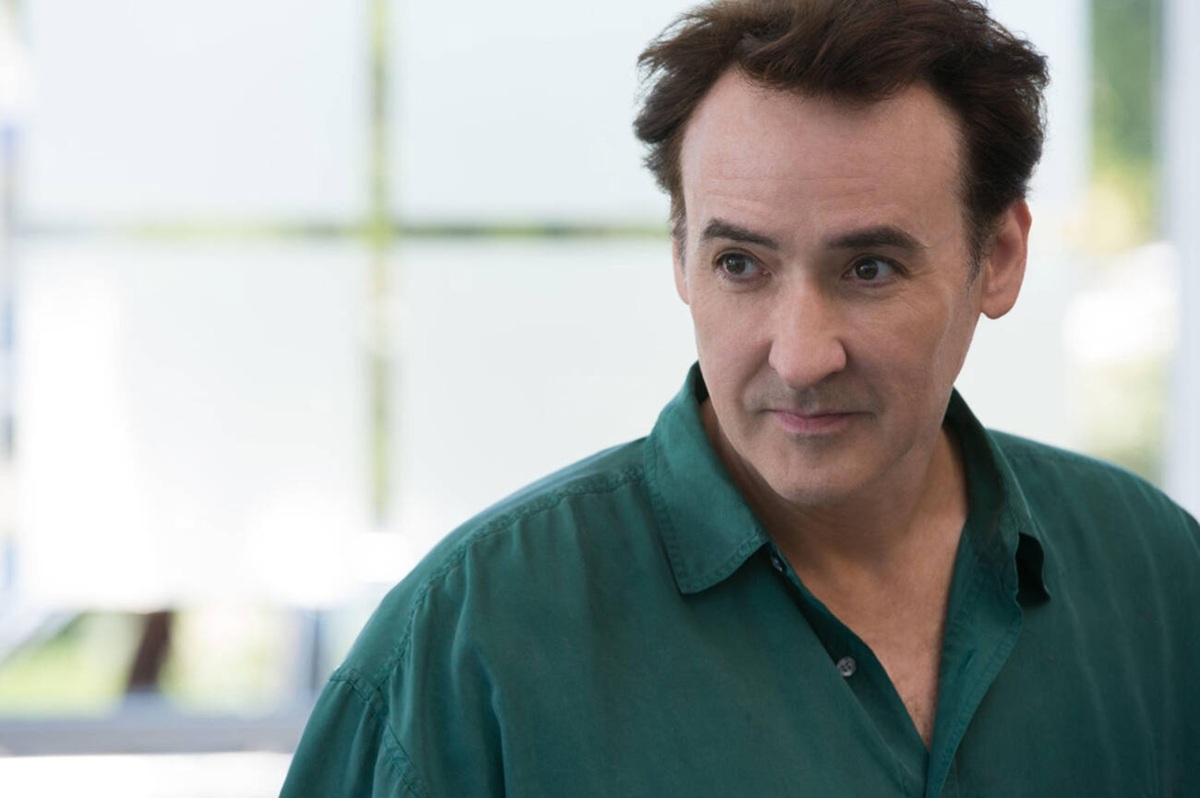

| Quick Facts | Details |
|---|---|
| Full Name | William B. Cusack |
| Known As | Bill Cusack |
| Date of Birth | October 2, 1964 |
| Birthplace | New York City, New York, USA (raised Evanston, Illinois) |
| Age (2026) | 61 years old |
| Nationality | American |
| Heritage | Irish-American |
| Father | Dick Cusack (Richard John Cusack, 1925–2003) — actor and filmmaker; independent cinema; appeared in John’s films |
| Mother | Nancy (née Carolan) Cusack — former mathematics teacher; co-owner of film production company |
| Siblings | Ann Cusack (b. 1961); Joan Cusack (b. 1962, Oscar-nominated); Bill (b. 1964); John Cusack (b. 1966); Susie Cusack — all actors |
| Position | Third of five children; older brother of John Cusack by two years |
| Childhood | Grew up in Evanston, Illinois — deeply theatrical household |
| Training | Piven Theatre Workshop, Chicago (like all Cusack siblings) |
| Education | Art Institute of Chicago |
| Career | Actor and producer — character roles; supporting parts in major Hollywood productions |
| Theater | Many plays of John’s theater group “New Criminals”; stage productions |
| Key films | The Fugitive (1993); Ed Wood (1994, Tim Burton); Con Air (1997, paramedic); Grosse Pointe Blank (1997, waiter — with John) |
| Collaborations with John | Grosse Pointe Blank (1997); War, Inc.; The Jack Bull |
| Wife | LaFern Cusack — married November 28, 2008 |
| Family award | Commitment to Chicago Award (with entire Cusack family) — 2000 |
| Net worth | Not publicly disclosed; modest relative to John’s $50M |
The Cusack family of Evanston, Illinois produced five actors, one filmmaker father, one former mathematics teacher mother, one Oscar nomination (Joan, twice), one Hollywood Walk of Fame star (John), and one Commitment to Chicago Award shared by the entire family in 2000. In the middle of that family — older than John by two years, younger than Joan by two — is Bill Cusack: an actor and producer whose credits include The Fugitive, Ed Wood, Con Air, and Grosse Pointe Blank, whose training at the Piven Theatre Workshop and the Art Institute of Chicago gave him the specific foundation for a career built entirely on craft rather than celebrity, and who has spent four decades doing the work without spending much energy on the spotlight.
He is the Cusack who chose the work over the fame. In a family whose other members include one of the most recognised character actresses of her generation and one of Hollywood’s defining leading men of the 1980s and 1990s, that is a specific kind of choice whose value the industry’s standard metrics cannot adequately measure.
He is sixty-one years old. He married LaFern in 2008. He trained at the Piven Workshop alongside his siblings and at the Art Institute of Chicago alongside nobody particularly famous. He appeared in some of the most significant American films of the 1990s in roles whose contribution to those films was real and whose billing did not reflect it. He is the actor in the family of actors who most completely became what the Piven Theatre Workshop was trying to produce: a person for whom the performance was the point.
Evanston, Illinois: The Theatrical Household
William B. Cusack was born on October 2, 1964, in New York City — the third of five children born to Dick Cusack and Nancy Carolan Cusack, in a household whose specific character was shaped, from before Bill was old enough to understand it, by the particular conviction that performance was a serious vocation whose demands were worth the sacrifices they required.
The family relocated to Evanston, Illinois — the Lake Michigan suburb directly north of Chicago whose specific combination of Northwestern University’s academic culture, Chicago’s cultural gravitational pull, and the particular atmosphere of a community that took the arts seriously without taking itself too seriously — gave all five Cusack children the formation of people who grew up in a world where acting was not exotic or aspirational but the ordinary daily language of their household.
His father, Dick Cusack — born Richard John Cusack in 1925 — was an actor and filmmaker whose specific professional identity was shaped by the independent cinema tradition: he produced documentary and short films, appeared in various stage and screen productions, and eventually became the anchor of the ensemble that his son John assembled for his own productions. Dick Cusack appeared in John’s films including Eight Men Out (1988), Say Anything (1989), The Grifters (1990), and Grosse Pointe Blank (1997) — the family pattern of professional collaboration that Bill would sustain across his own career, and that reflected the specific Cusack household understanding that art was a family business in the most literal sense. Dick Cusack died on January 2, 2003.
His mother, Nancy Carolan Cusack, was a former mathematics teacher who subsequently became co-owner of Dick’s film production company — the specific professional evolution of a woman whose analytical formation as a mathematics teacher gave the production company’s operations the organisational discipline that creative enterprises consistently require and consistently fail to find.
The five children — Ann (born 1961), Joan (born 1962), Bill (born 1964), John (born 1966), and Susie — grew up in a household where scripts were read at the dinner table, where performances were discussed as seriously as any other subject, and where the expectation that you would find a way to participate in the making of things was the ambient standard against which everyone was measured.
The Irish-American Catholic family identity gave the household its specific moral texture — the combination of community obligation, artistic seriousness, and the particular Chicago Irish cultural formation that shaped the specific political and social consciousness that John Cusack’s subsequent public profile would most visibly express and that Bill absorbed more quietly.
Piven Theatre Workshop: The Training That Built Them All
All five Cusack children passed through the Piven Theatre Workshop — the Chicago institution founded by Byrne Piven and Joyce Piven whose specific training methodology, built around ensemble work, physical theatre, storytelling, and the particular discipline of improvisational theatre, produced not just the Cusacks but also Jeremy Piven (Byrne and Joyce’s son, who grew up in the Workshop’s rehearsal rooms and subsequently became one of television’s most recognisable faces through Entourage) and a generation of Chicago-trained performers whose specific approach to character work reflected the Workshop’s foundational commitment to the work itself over the career the work might eventually produce.
Bill Cusack began training at the Workshop as a child — the same formative years that Joan and Ann were developing the capabilities that would eventually produce Joan’s Oscar nominations, and that John was developing the specific combination of physical ease and emotional directness that his subsequent film career would deploy across dozens of leading roles.
The Workshop’s training philosophy was the specific antidote to the Hollywood machinery’s standard approach to producing performers: rather than training people to be stars, it trained people to be actors — to understand the physical vocabulary of character, to listen to other performers with the specific quality of attention that genuine ensemble work requires, and to treat the story being told as more important than the person telling it.
Bill absorbed this teaching with a thoroughness that his subsequent career documents: the choice of supporting roles, the sustained investment in ensemble work, the consistent preference for the production’s needs over his own billing — these are not the choices of someone who failed to achieve leading man status but the choices of someone who understood, from the Workshop’s training, that the work is the point.
After the Piven Workshop years, he attended the Art Institute of Chicago — adding a fine arts education to the theatrical training, the combination producing the specific creative formation of someone who understood visual composition, spatial dynamics, and the relationship between the physical and the conceptual that character acting at its best requires.
John’s New Criminals Theatre Company and the Chicago Stage
In 1988, John Cusack founded New Criminals Theatre Company — the Chicago-based ensemble theatre group modelled after Tim Robbins’ Actors’ Gang in Los Angeles, whose specific mission was the production of politically engaged, formally adventurous stage work that the mainstream commercial theatre would not produce and that the Workshop tradition had trained its members to pursue.
Bill was a consistent presence in the New Criminals productions — appearing in many of the company’s plays across the late 1980s and 1990s, building the sustained stage work whose specific value for a character actor is not easily quantified by credits alone. Stage work develops range, physical vocabulary, the ability to sustain character across an entire evening without the editing and retakes that film production provides, and the specific ensemble sensitivity that the Piven Workshop had been teaching since Bill was a child.
The New Criminals represented the specific Chicago theater culture of the period — one of the most vibrant independent theater scenes in the country, whose practitioners were building something they believed in rather than auditing the entertainment industry’s available opportunities. Bill’s sustained participation in that work is the most complete available expression of the specific performing philosophy the Piven Workshop had instilled: make theater because theater matters, not because it leads somewhere.
The Fugitive (1993): The Debut in a Defining Thriller

Bill Cusack’s first major film credit came in The Fugitive (1993) — Andrew Davis’s landmark action thriller starring Harrison Ford as Dr. Richard Kimble, a surgeon wrongly convicted of his wife’s murder, and Tommy Lee Jones as the relentless US Marshal Sam Gerard, a performance that won Jones the Academy Award for Best Supporting Actor.
The Fugitive was, by the commercial and critical standards of 1993, one of the most successful films of the year — grossing $368 million worldwide against a $44 million budget, receiving seven Academy Award nominations, and establishing itself as one of the defining action thrillers of the decade whose specific combination of physical propulsion and genuine character work distinguished it from the standard chase-film template.
Bill’s role was supporting — the specific type of credit that places a performer in a major production without placing them at its centre, and whose value for a character actor is the professional credential of having operated within a production of that scale and quality. The Fugitive credit established him as someone the industry would consider for similar roles in subsequent productions, which is exactly what followed.
Ed Wood (1994): Tim Burton and the Craft Ensemble
Ed Wood (1994) was Tim Burton’s affectionate black-and-white biographical comedy-drama about Edward D. Wood Jr. — the filmmaker widely celebrated as the worst director in Hollywood history, whose specific combination of sincere artistic ambition and technical incompetence produced films whose badness has become, across the intervening decades, a form of genuine entertainment.
The film starred Johnny Depp as Wood with the specific physical and emotional generosity that Depp brought to his best character work, alongside Martin Landau’s Academy Award-winning performance as Bela Lugosi, and supporting work from Sarah Jessica Parker, Patricia Arquette, and Jeffrey Jones — an ensemble whose combined quality gave the film the specific warmth that its subject matter required: affection rather than condescension, celebration rather than mockery.
Bill Cusack appeared in a supporting role in a production whose critical standing — it is consistently ranked among the best biographical films of the 1990s and among Burton’s finest work — places it significantly above the commercial mainstream that the Fugitive credit represented. The Ed Wood appearance documented his capability for the specific tonal register of a Tim Burton production: the deadpan sincerity, the physical stylisation, the particular quality of committing fully to material whose absurdist premises require the actor to find the emotional truth inside the comedy.
Con Air (1997): The Action Peak and the Brother in the Lead
Con Air (1997) — Simon West’s high-concept action film whose premise, a plane full of the country’s most dangerous prisoners hijacked mid-flight by its cargo, gave the production the specific combination of contained location, escalating threat, and the requirement for an ensemble of genuinely compelling character performers that the script’s demands imposed — was one of the biggest films of its year.
The cast assembled for Con Air was the specific expression of what a Jerry Bruckheimer production’s budget could attract in 1997: Nicolas Cage as the wrongly imprisoned Army Ranger, John Malkovich as the brilliantly psychopathic Cyrus “The Virus” Grissom, Steve Buscemi as the disturbingly soft-spoken Garland Greene, Ving Rhames, Danny Trejo, and — as the US Marshal Vince Larkin working the case from the ground — John Cusack.
Bill played a paramedic — a supporting role in one of his brother’s most commercially visible films, the specific family pattern of John including Bill in his productions expressing itself at a studio scale that the New Criminals productions had not provided. Con Air grossed $224 million worldwide — one of the most commercially successful films of 1997 and the largest production that Bill’s credits to this point had placed him within.
The specific dynamic of a supporting role in a film where your brother is a lead is the kind of professional situation that requires the particular psychological equanimity of someone who has genuinely made peace with the choice to prioritise craft over billing — and whose presence on the set, by every available account, was exactly that: a working actor doing his specific professional job, not a celebrity sibling riding a coattail.
Grosse Pointe Blank (1997): The Waiter, the Brother, and the Cult Classic
Of all the films in Bill Cusack’s career, Grosse Pointe Blank (1997) is the one whose specific biographical detail — he played a waiter in a film where his brother John played the lead, his sister Joan played John’s secretary, and his father Dick appeared in a supporting role — most completely illustrates the specific character of the Cusack family’s approach to collaborative work.
The film — directed by George Armitage from a script that John co-wrote and produced through his New Crime Productions company — is a black comedy about a professional hitman who returns to his hometown of Grosse Pointe, Michigan for his ten-year high school reunion and finds himself simultaneously entangled with an old flame, pursued by a rival hitman, and confronted by the specific existential absurdity of his chosen profession.
John Cusack as Martin Q. Blank. Joan Cusack as Marcella, Martin’s infinitely patient secretary. Dick Cusack in a supporting role. Bill Cusack as a waiter. The specific accumulation of Cusacks across a single production is the most concentrated available expression of a family’s collective professional investment in a single filmmaker’s vision — and the specific quality of the film, whose cult standing has grown consistently across the decades since its release, vindicates the investment completely.
Grosse Pointe Blank is now considered one of the decade’s most distinctive films: a black comedy that takes both its comedy and its moral questions seriously, whose specific tone — deadpan, melancholy, frequently hilarious — reflected the specific artistic sensibility of a filmmaker-actor who had been working with the same ensemble since his Chicago theater days.
Bill’s waiter role is the kind of supporting contribution that the film’s texture requires and that lesser productions fail to fill adequately — the specific human background of a story whose foreground is occupied by the hitman and his complications, and whose credibility depends on the people in the periphery being fully inhabited rather than merely present.
The Jack Bull, War, Inc., and the Sustained Family Collaboration
The collaborations with John continued across the subsequent decade.
The Jack Bull (1999) — the HBO Western film directed by John Badham, starring John Cusack as a horse trader whose confrontation with a corrupt landowner escalates into a larger conflict about justice and the law, with John Goodman and L.Q. Jones in supporting roles — gave Bill another appearance in a John Cusack production whose specific quality and seriousness of purpose reflected the particular kind of project that John was consistently drawn to: morally engaged, historically grounded, not easily categorised.
War, Inc. (2008) — the satirical dark comedy about a hitman sent to assassinate a Middle Eastern oil minister, produced during the George W. Bush administration’s final year with the specific political urgency that that moment provided, starring John alongside Hilary Duff, Marisa Tomei, and Ben Kingsley — continued the pattern. Bill appeared. The film was the thing. The billing was secondary.
The pattern across these collaborations is consistent: John produces and stars, Bill contributes the specific craft that the ensemble requires, and the film is better for having someone in the supporting cast whose theatrical training and thirty years of screen experience give the secondary roles the human weight they need.
LaFern Cusack and the Private Life
On November 28, 2008, Bill Cusack married LaFern Cusack — the ceremony and the marriage conducted with the same commitment to privacy that his professional choices had always reflected.
LaFern is not a public figure. The marriage has been maintained entirely outside the entertainment press’s attention — a deliberate choice, in a family whose members have been photographed on Hollywood red carpets and nominated for Academy Awards and profiled in major publications, that reflects the specific orientation of someone who has always understood the difference between the work and the celebrity the work sometimes produces.
He lives in the Chicago/Evanston area — the community where his family has been rooted for two generations, where the Piven Theatre Workshop still operates, where the New Criminals productions were made. He did not relocate to Los Angeles when John’s career made Los Angeles the natural centre of the family’s professional life. He stayed where the work that mattered to him was.
The Cusack Family Legacy
The Commitment to Chicago Award given to the entire Cusack family in 2000 — to Dick, Nancy, Ann, Bill, Joan, John, and Susie collectively — was the specific formal recognition of something that individual career achievements cannot adequately capture: the contribution of an entire family to a city’s cultural life across two generations of sustained creative work.
Joan Cusack received Academy Award nominations for Working Girl (1988) and In & Out (1997), and has sustained one of the most consistently excellent character actress careers of her generation across Addams Family Values, School of Rock, and dozens of other productions whose quality reflects the same Piven Workshop formation that Bill received.
Ann Cusack appeared in A League of Their Own (1992), Multiplicity (1996), and The Promotion (2008) — building a career whose specific quality and range demonstrate the same theatrical foundation.
John Cusack became one of the defining leading men of American cinema across the 1980s and 1990s — Say Anything, Grosse Pointe Blank, Being John Malkovich, High Fidelity, Adaptation — and has maintained a career whose continued relevance forty years after his film debut is the specific achievement of someone who has always prioritised interesting work over commercial calculation.
Bill Cusack sits in the middle of this family — literally and figuratively. Not the most famous. Not the most decorated. The one who trained hardest at the Workshop. The one who stayed in Chicago. The one who played the waiter and the paramedic and the supporting role in the ensemble because those were the roles the production needed and filling them well was what the work required.
Conclusion
Bill Cusack was born in New York City on October 2, 1964, the third of five children in the theatrical household that produced Joan and John and the rest. He grew up in Evanston. He trained at the Piven Workshop and the Art Institute of Chicago. He appeared in The Fugitive and Ed Wood and Con Air and Grosse Pointe Blank. He acted in his brother’s theater company and his brother’s films. He received the Commitment to Chicago Award with his entire family in 2000. He married LaFern in 2008. He continued working. He is sixty-one years old in 2026.
He is the Cusack who chose craft over fame — which, in the family that produced Joan Cusack and John Cusack, is not a failure of ambition but a specific and considered form of it.
The Piven Theatre Workshop taught all of them that the work was the point.
Bill Cusack believed it most completely.
FAQs
1. Who is Bill Cusack? Bill Cusack — full name William B. Cusack — is an American actor and producer born on October 2, 1964, in New York City and raised in Evanston, Illinois. He is the older brother of John Cusack and younger brother of Joan Cusack and Ann Cusack. His career spans four decades of character work and supporting roles in major Hollywood productions.
2. How is Bill Cusack related to John Cusack and Joan Cusack? Bill Cusack is the older brother of John Cusack (born 1966) by two years, and the younger brother of Joan Cusack (born 1962) and Ann Cusack (born 1961). All five Cusack siblings — Ann, Joan, Bill, John, and Susie — are actors, trained at the Piven Theatre Workshop in Chicago. Their father, Dick Cusack, was also a filmmaker and actor.
3. What are Bill Cusack’s most famous roles? Bill Cusack’s most notable film credits include a supporting role in The Fugitive (1993) with Harrison Ford and Tommy Lee Jones; a supporting role in Tim Burton’s Ed Wood (1994) with Johnny Depp; a paramedic in Con Air (1997) alongside his brother John Cusack; and a waiter in the cult classic Grosse Pointe Blank (1997), which also starred John Cusack and Joan Cusack.
4. What is Bill Cusack’s net worth? Bill Cusack’s net worth has not been publicly disclosed. His career as a character actor and supporting player, alongside his theater work and production contributions, reflects the financial reality of a performer who prioritised craft over commercial calculation. This is modest relative to his brother John Cusack’s estimated $50 million net worth.
5. Where did Bill Cusack train as an actor? Bill Cusack trained at the Piven Theatre Workshop in Chicago — the institution founded by Byrne and Joyce Piven where all five Cusack siblings developed their theatrical foundations, alongside Jeremy Piven. He subsequently attended the Art Institute of Chicago, combining theatrical training with a fine arts education.