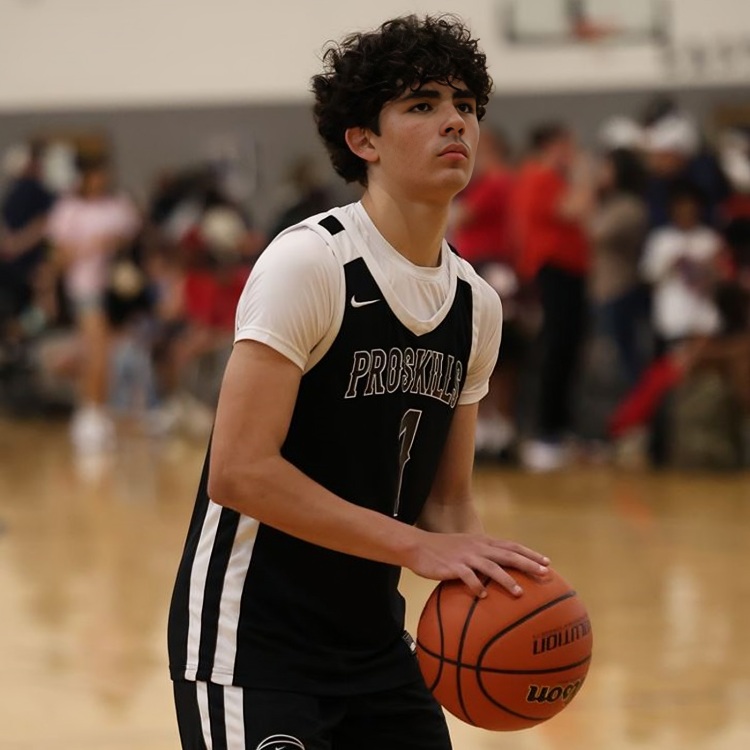

| Quick Facts | Details |
|---|---|
| Full Name | Draven Duncan |
| Nickname | Dra |
| Birth Year | 2007 |
| Exact birth date | Not publicly disclosed |
| Birthplace | San Antonio, Texas, USA |
| Age (2026) | ~18–19 years old |
| Height | 6 ft 6 in (1.98 m) |
| Nationality | American |
| Father | Tim Duncan (b. April 25, 1976, Saint Croix, U.S. Virgin Islands) — 5× NBA Champion; 2× NBA MVP; 3× Finals MVP; 15× All-Star; “The Big Fundamental”; Hall of Fame 2020 |
| Mother | Amy Sherrill Duncan (b. 1977, North Carolina) — philanthropist; married Tim July 2001; separated August 2013 |
| Maternal grandparents | Fred and Judy Sherrill |
| Paternal grandmother | Ione Duncan (midwife) — died breast cancer April 1990, day before Tim’s 14th birthday |
| Paternal grandfather | William Duncan — mason |
| Sister | Sydney Duncan (b. 2005) — volleyball player at Stanford University |
| Half-sister | Quill Duncan (b. 2017) — Tim’s daughter with partner Vanessa; named after Marvel’s Peter Quill/Star-Lord |
| School | TMI Episcopal School (Texas Military Institute), San Antonio — Class of 2026 |
| Head coach | Monty Williams — former NBA Coach of the Year (2021-22, Phoenix Suns); fired by Detroit Pistons; now TMI Episcopal head coach since 2024 |
| Teammates | Elijah Williams (Monty’s son — signed with Baylor); Ozmel and Ojani Bowen (Bruce Bowen’s sons) |
| Position | Small forward / combo forward |
| Statistics | Top 30 TAPPS 6A for 2 stats; top 4 TAPPS 6A District 3 for 1 stat |
| Recent results | Won vs Savio 93-26 (Jan 6, 2026); Lost at Nike TOC vs Millennium HS 66-76 (Jan 1, 2026) |
| Tim at games | Sighted at January 2026 basketball tournament supporting Draven |
| Tim’s career | Wake Forest; #1 overall pick 1997 NBA Draft; entire career with San Antonio Spurs (1997–2016) |
| Tim’s background | Started as competitive swimmer; switched to basketball age 14 after Hurricane Hugo destroyed island’s only Olympic pool |
| Tim’s Foundation | Tim Duncan Foundation (2001) — health, education, youth sports; $350,000+ in first two years for cancer research |
| Social media | Not publicly confirmed |
| Tim’s net worth | ~$130 million |
| Draven’s net worth | Not applicable — student athlete |
In the early hours of September 17, 1989, Hurricane Hugo made landfall on Saint Croix in the United States Virgin Islands — a Category 4 storm whose sustained winds exceeded 140 miles per hour and whose destruction was so comprehensive that the island’s infrastructure required years to rebuild. Among the structures it destroyed was the only Olympic-sized swimming pool on Saint Croix.
The pool’s destruction changed the course of basketball history.
The thirteen-year-old boy who had been training as a competitive swimmer — who had taken up the sport partly as a way of processing the grief of his mother’s breast cancer diagnosis, partly through the specific drive of someone who had identified a goal and was pursuing it with total commitment — was suddenly without the facility that his ambition required. A year after Hugo, his mother Ione died. The day before his fourteenth birthday. Her dying wish was that he go to college.
The boy’s name was Tim Duncan. Without a pool, he took up basketball — the sport at which he was initially, by his own account and the accounts of those who watched him begin, genuinely awkward. He overcame the awkwardness at a pace that Wake Forest University’s coaching staff found sufficiently remarkable to offer him a scholarship, and the San Antonio Spurs found sufficiently remarkable to select him first overall in the 1997 NBA Draft. He won five championships, two MVP awards, three Finals MVPs, and fifteen All-Star selections. He played his entire career for a single franchise. He retired in 2016 as the greatest power forward in the history of the sport. In 2020, he was inducted into the Naismith Memorial Basketball Hall of Fame.
His son Draven Duncan — nicknamed “Dra” by everyone who knows him — is a senior at TMI Episcopal School in San Antonio, Texas. He is six feet six inches tall. He plays small forward. His head coach is Monty Williams, who won the NBA Coach of the Year award in 2022 with the Phoenix Suns and was fired by the Detroit Pistons after a 14-68 season. On January 6, 2026, Tim Duncan was sighted at a basketball tournament where Draven’s team, the TMI Episcopal Panthers, defeated Savio High School by a score of 93-26.
The son of the greatest power forward in NBA history is playing high school basketball in the city where his father won five championships. His head coach is an NBA veteran. His teammates are the sons of other NBA alumni. His father comes to the games.
Saint Croix, Virgin Islands: The Father Who Started as a Swimmer
Before there was Draven Duncan, there was the specific, remarkable story of what made Tim Duncan the person and the player he became — because understanding the father is the most direct available route to understanding the specific formation of the son.
Timothy Theodore Duncan was born on April 25, 1976, in Christiansted, Saint Croix, in the United States Virgin Islands — an American territory in the Caribbean whose specific character, shaped by its colonial history, its tourism economy, and the close-knit community of a small island, gave Tim a formation that was in almost every way different from the urban American basketball pipeline that produces most NBA players.
His father, William Duncan, worked as a mason. His mother, Ione Duncan, was a midwife — a vocation whose specific combination of care, precision, and the management of high-stakes physical events under pressure is not entirely unlike the combination of skills that Tim Duncan would eventually deploy on a basketball court, though the comparison would likely have amused her more than it amuses him.
Ione had one specific request of her son before her illness progressed beyond her capacity to make requests: that he go to college. She died of breast cancer on April 24, 1990 — the day before Tim’s fourteenth birthday. The loss was, by every account of the years that followed, the most formative event of his life: the specific grief of a fourteen-year-old whose mother had just died was directed, by Tim’s own account, into the basketball that Hurricane Hugo had redirected him toward from the swimming that his grief had originally found.
He was awkward at the beginning. Saint Croix Country Day School athletic director Nancy Pomroy described him as “so big and tall, but awfully awkward at the time.” He overcame the awkwardness. By his senior year at St. Dunstan’s Episcopal High School, he was averaging 25 points per game and had attracted attention from multiple universities. He played at Wake Forest University for four years, won the John Wooden Award, was named Naismith College Player of the Year, and was selected first overall by the San Antonio Spurs in the 1997 NBA Draft.
The nineteen years that followed — nineteen seasons with a single franchise, five championships (1999, 2003, 2005, 2007, 2014), back-to-back MVPs (2002, 2003), the specific fundamental soundness that earned him the nickname “The Big Fundamental” from David Robinson, and the specific consistency that made him the most reliable major player in the history of the sport — produced a career whose record speaks for itself and whose character, shaped by his mother’s dying wish and the hurricane that redirected his sport, is among the most complete in American athletic biography.
He retired on July 11, 2016. He was inducted into the Hall of Fame in 2020. His jersey number 21 hangs in the rafters of the Frost Bank Center in San Antonio. His son plays basketball in San Antonio. The city is his city. The sport is the family’s sport.
Amy Sherrill and the San Antonio Childhood
Tim Duncan married Amy Sherrill in July 2001 — the year he won his second consecutive NBA MVP award and the year his foundation, the Tim Duncan Foundation, was established to fund health awareness, education, and youth sports programmes in San Antonio, Winston-Salem, and the U.S. Virgin Islands. Amy was born in 1977 in North Carolina — the daughter of Fred and Judy Sherrill, and a philanthropist whose own charitable work aligned with Tim’s Foundation priorities and gave their household a dual commitment to service that shaped the values their children were raised with.
Their daughter Sydney Duncan was born in 2005 — the year Tim won his third NBA championship with the Spurs. Sydney has followed her own athletic path: she plays volleyball at Stanford University, building a career in a different sport whose demands of technical skill, spatial intelligence, and competitive discipline reflect the specific formation of a household where athletic excellence was the ambient standard.
Draven Duncan was born in 2007 — the year Tim won his fourth NBA championship, his fourth Finals MVP, and his fourth All-Star selection in a row. By the time Draven was old enough to understand what his father did professionally, Tim was already one of the most decorated athletes in the history of American sport. The NBA championship ring was not a hypothetical aspiration in the Duncan household; it was a physical object that existed in multiple versions, each representing a specific year whose games Draven was either too young to watch or had watched from the specific perspective of a child who understood the stakes differently than an adult does.
Tim and Amy separated in August 2013 — a mutual and quietly handled separation that both parties managed with the specific discretion that Tim Duncan’s general approach to his private life had always maintained. Draven was six years old. Sydney was eight. The co-parenting arrangement that followed has allowed both children to maintain close relationships with both parents, and Tim’s consistent presence at Draven’s basketball games in 2025 and 2026 is the most recent available documentation of the specific closeness between father and son that the biographical record reflects.
In 2017, Tim and his partner Vanessa welcomed a daughter named Quill Duncan — named after Peter Quill, the Marvel Comics character known as Star-Lord, whose identity as the leader of the Guardians of the Galaxy reflects Tim Duncan’s well-documented enthusiasm for comic books and fantasy gaming. The name is the most publicly available evidence of a personality dimension that Tim’s public persona — reserved, fundamental, consistently deflecting attention from himself — tends to obscure: the man who is the greatest power forward in NBA history is also the man who named his daughter after a Marvel superhero.
TMI Episcopal School: Where NBA Legacies Learn Together
TMI Episcopal School — the Texas Military Institute in San Antonio — is a private co-educational school whose combination of academic rigour, military-influenced discipline, and competitive athletic programmes has made it one of the more distinctive educational environments in Texas. Its full name reflects its dual heritage: founded as a military institute, now operated as an Episcopal school, maintaining elements of both traditions in a campus culture that emphasises leadership, service, and personal accountability alongside academic and athletic development.
It is, in the context of the 2024–2025 and 2025–2026 academic years, also a school whose basketball programme has assembled one of the more remarkable collections of NBA family legacy in American high school sport — a circumstance produced by the specific convergence of geography, professional connection, and parental choice.
Monty Williams — the NBA’s 2021-22 Coach of the Year award winner, who guided the Phoenix Suns to a 64-win regular season and a Western Conference Finals appearance before the franchise’s subsequent decline, who then signed a six-year, $78 million contract with the Detroit Pistons only to be fired after a 14-68 first season — moved to San Antonio and became the head coach of the TMI Episcopal Panthers basketball programme in 2024. His sons Elijah and Micah Williams attend the school. Elijah, a senior, recently signed a commitment to play basketball at Baylor University. Micah also plays under his father.
Bruce Bowen — the former San Antonio Spurs defensive specialist who won three championships alongside Tim Duncan and whose specific reputation as one of the most effective perimeter defenders in NBA history made him a central figure in the Spurs dynasties — has sons Ozmel and Ojani Bowen attending TMI Episcopal and playing on the basketball team.
And Tim Duncan’s son Draven — nicknamed “Dra” by his teammates and the MaxPreps platform that tracks his statistics — is also a senior, also on the basketball team, also being coached by a man whose professional basketball credentials are as substantial as those of any high school coach in the country.
The specific atmosphere of a practice gym where the coach is Monty Williams, the teammates include the sons of Bruce Bowen and Monty Williams, and the opponent-scouting conversations are conducted with the accumulated knowledge of a coaching staff whose combined NBA experience spans decades — is an atmosphere that no conventional high school basketball programme can replicate. Draven Duncan is training in it.
The Basketball: What “Dra” Has Built
At 6 feet 6 inches — the height that gives him legitimate versatility across the forward positions, and that places him among the tallest players at his school level in his division — Draven Duncan plays as a small forward for the TMI Episcopal Panthers, a role whose specific demands of perimeter scoring, defensive switching, and transition play suit the combination of size and athleticism that observers have described in his developing game.
His MaxPreps and SportsRecruits profiles — the recruitment tracking platforms where college coaches and scouts monitor high school athletes — list him as a combo forward whose specific combination of size and skill development makes him potentially versatile at the collegiate level if his trajectory continues. His documented statistics in the 2025-26 season place him in the top 30 in Division TAPPS 6A for two statistical categories and in the top 4 in TAPPS 6A District 3 for one statistical category — rankings whose specific meaning within the Texas high school basketball ecosystem, one of the most competitive in the country, reflects genuine competitive capability rather than name-recognition placement.
The TMI Episcopal Panthers played at the Nike Tournament of Champions (Nike TOC) in January 2026 — one of the most prestigious high school basketball invitational tournaments in the country, whose HoopHall West Bracket brings together elite programmes from across the Western United States. In that tournament, the Panthers lost to Millennium High School 76-66 on January 1, 2026 — a result that reflects the genuine competitive level of a tournament whose field is specifically assembled from the programmes that have earned the invitation.
Five days later, on January 6, 2026, the Panthers defeated Savio High School 93-26 — a result whose margin reflects the specific quality gap between TAPPS 6A Division 3’s competitive levels. Tim Duncan was sighted at a basketball tournament supporting Draven during this period — the Pounding the Rock Spurs community site noting his presence with the specific affection of a fan base that has been watching Tim Duncan for nearly thirty years and was pleased to see him watching his son.
The scouts who have observed Draven describe a player whose basketball IQ — the specific quality of knowing where to be on the court before the play develops there — exceeds his current production level, suggesting that the cognitive dimension of the sport, which is the dimension most directly transmissible between a father of Tim Duncan’s analytical intelligence and his son, is the most developed aspect of his game. His defensive awareness and positional flexibility are the other qualities most frequently noted — both of which are, not coincidentally, the qualities for which his father was considered without peer across nineteen professional seasons.
Tim Duncan at the Games: The Quiet Father in the Stands
One of the biographical details about Tim Duncan that the public record of his playing career tends to obscure is the specific warmth of his private identity — the man who named his daughter Quill after a Marvel superhero, who was known by his Spurs teammates for an encyclopedic knowledge of Dungeons & Dragons, who maintained a genuine sense of humour behind the deadpan exterior that the David Letterman interview of 1999 made briefly famous (“I’m just chillin’,” he told Letterman, when asked how he felt about just winning the championship) — is the same man who attends his son’s high school basketball games in January 2026 and watches from the stands.
The Pounding the Rock entry documenting his sighting at the January 2026 tournament is brief and affectionate — the Spurs fan community noting the presence of their former cornerstone player at a high school gym in San Antonio, watching a game whose outcome has no consequences for the sport’s record books but whose significance to the man watching it from the stands is total. He is watching his son play basketball. He is in San Antonio. He is still there, as he has been for nearly thirty years, as the specific geographical anchor of both his professional legacy and his family’s daily life.
The Tim Duncan Foundation — established in 2001, the year Draven’s parents married — continues to operate across the domains of health awareness, education, and youth sports. Between 2001 and 2002 alone, it raised more than $350,000 for breast and prostate cancer research — the specific philanthropic commitment of a man whose mother died of breast cancer the day before his fourteenth birthday, and whose foundation is the concrete expression of what that loss meant and what he intended to do about it.
Draven has grown up in the household of that foundation’s founder — in the specific atmosphere of a family whose commitment to service, whose connection to the San Antonio community, and whose understanding of what sport can mean to a child’s development are not abstract values but daily practices.
Sydney, Quill, and the Duncan Family in 2026
The Duncan family of 2026 is a family spread across three generations of athletic and academic achievement in a way that reflects the specific values Tim Duncan has consistently modelled.
Sydney Duncan — Draven’s older sister, born in 2005 — is at Stanford University playing volleyball: a choice of sport and institution that reflects both the athletic capability and the academic seriousness of a family whose founder went to Wake Forest on a full scholarship and understood the value of education as the foundation beneath athletic aspiration. Sydney’s Stanford volleyball career is the most publicly documented dimension of the Duncan siblings’ own athletic achievement, and its specific quality — Stanford is one of the country’s elite athletic and academic programmes — reflects the formation that growing up as Tim Duncan’s daughter produces.
Quill Duncan — the youngest sibling, born in 2017, named after Marvel’s Peter Quill/Star-Lord — is nine years old in 2026, at the specific age where the awareness of what her father’s career meant is beginning to develop without yet being old enough to fully understand it. Her name is the most affectionate biographical detail in the entire family’s record: the five-time NBA champion named his youngest daughter after a fictional space pirate. This is a man who contains multitudes.
The Legacy He Is Building
Draven Duncan is a senior in the Class of 2026. He plays basketball for a programme coached by an NBA Coach of the Year winner. He plays alongside the sons of NBA champions and coaches. He is six feet six inches tall. He plays with the specific basketball IQ that his father’s analytical approach to the sport produces in the people who are around it from birth. He trains in the city where his father’s name hangs from the rafters.
He has not committed to a college programme as of the available public record. The recruiting process for the Class of 2026 continues. Division I programmes are watching. The combination of genetics, coaching, competitive environment, and the specific formation of growing up as Tim Duncan’s son — with the discipline, humility, and fundamental soundness that the nickname “The Big Fundamental” implies as a household standard — is a combination whose outcomes, whatever sport or field they express themselves through, are likely to reflect the specific quality of the household that produced them.
He is eighteen years old, approximately. He goes by “Dra.” His dad comes to the games.
Conclusion
Draven Duncan was born in San Antonio in 2007 — the year his father won his fourth NBA championship. He grew up in the city where his father played his entire nineteen-year career, whose fans watched Tim Duncan become the greatest power forward in NBA history, and where the specific culture of basketball excellence that the Spurs dynasties produced is the ambient atmosphere of the community. He plays basketball at a school coached by a former NBA Coach of the Year, alongside the sons of other NBA alumni, watched from the stands by a father who came to watch.
His father started as a swimmer. Hurricane Hugo took the pool. A mother’s dying wish sent him to college. The first overall pick of the 1997 draft became the anchor of five championships. And now he is in the stands at a high school gym in San Antonio, watching the same sport that his own lost pool redirected him toward, as his son learns what he will eventually make of the game and the name and the city and the foundation that the hurricane and the grief and the dying wish and the five rings produced.
The Big Fundamental is watching. Dra is playing. San Antonio is watching both.