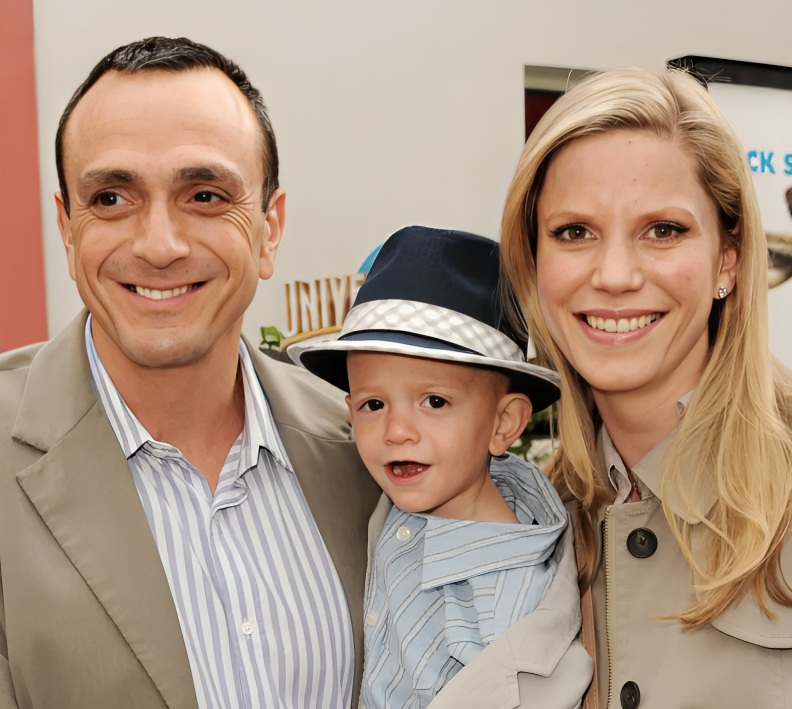
Katie Wright: The Villanova Actress Who Won a Festival Award, Discovered a Half-Brother on Set, and Then Became a Family Therapist

| Quick Facts | Details |
|---|---|
| Full Name | Kathryn Wright Azaria (née Wright) |
| Known As | Katie Wright |
| Date of Birth | December 25, 1971 |
| Birthplace | Kansas City, Missouri, USA |
| Raised | Villanova, Pennsylvania |
| Age (2026) | 54 years old |
| Nationality | American |
| Father | Scott Wright — physician |
| Mother | Mary Wright |
| Half-brother | Jack Noseworthy — actor (Idle Hands, U-571, Alive, Event Horizon); discovered the relationship while filming Idle Hands together (1999) |
| High School | Harriton High School, Villanova, Pennsylvania — graduated 1990 |
| Career | Actress (1993–2001); family therapist (2001–present) |
| TV debut | The Wonder Years — 2 episodes (1993, Season 6) |
| Key TV roles | Nina Gerard — Malibu Shores (NBC, 1996, with Keri Russell); Chelsea Fielding — Melrose Place (1997–1998) |
| Key TV movies | When Friendship Kills (1996, Alexis Archer); Detention: The Siege at Johnson High (1997); Late Last Night (1999, Mia); The David Cassidy Story (1999, Susan Dey) |
| Key films | It’s Pat: The Movie (1994); Idle Hands (1999, Tanya — with half-brother Jack Noseworthy); A.I. Artificial Intelligence (2001, Spielberg) |
| Hairshirt | Hairshirt (1998) — Corinne “Corey” Wells; co-producer and co-writer; Best Actress Award — 2000 Slamdunk Film Festival |
| Jack Noseworthy | Did NOT know he was her half-brother until they worked together on Idle Hands (1999) |
| Retirement | 2001 — left acting to become a family therapist |
| Post-retirement study | Moved to Rome, Italy to study family therapy |
| Current career | Licensed family therapist — New York City |
| Husband | Hank Azaria — married 2007; voice of Moe, Chief Wiggum, and a dozen other Simpsons characters; 6 Emmy Awards; net worth $90 million |
| Son | Hal Azaria (b. June 6, 2009) |
| Residence | New York City |
| Net worth (est.) | $1.5 million (independent career) |
| Combined household | ~$90 million with Hank Azaria |
She was born on Christmas Day. She discovered she had a half-brother while on the set of a film about a possessed hand — not before the production, not after it, but during it, while both of them were already cast and already filming. She co-wrote and co-produced an independent film that won her a Best Actress award at a festival. She retired from acting in 2001, moved to Rome to study family therapy, came back to New York, married the man who voices Moe Szyslak and Chief Wiggum, and had a son on June 6, 2009.
Katie Wright is fifty-four years old. She has been a licensed family therapist for more than two decades. The acting career she left was, by the evidence of an eight-year run that included The Wonder Years, Malibu Shores, Melrose Place, When Friendship Kills, a Spielberg film, and a festival Best Actress award — working. She left it anyway. The calling won.
The specific reason the public record on Katie Wright is sparse is not that she is unaccomplished. It is that she chose a vocation whose ethics require the very privacy that celebrity culture specifically violates, and she has honoured those ethics with a consistency that the entertainment industry’s gravitational pull toward visibility has not disturbed.
The physician’s daughter from Villanova, Pennsylvania, who was born on Christmas Day, who discovered a half-brother on a horror film set, who studied therapy in Rome, who married a man with six Emmys and a voice that has been heard by more people than almost any other voice in American television history — has chosen, across twenty-five years of professional life, to be almost completely invisible in the public record. That choice is, in its own way, the most complete available expression of who she is.
Kansas City, Villanova, and the Physician’s Household
Kathryn Wright was born on December 25, 1971 — Christmas Day — in Kansas City, Missouri. The specific biographical detail of a December 25 birthday is one that those who share it tend to have complicated feelings about: the merging of personal celebration with collective holiday, the specific dynamic of a birthday that arrives wrapped in other people’s traditions, whose annual recurrence is simultaneously your day and everyone else’s occasion.
She grew up not in Kansas City but in Villanova, Pennsylvania — the affluent Main Line suburb west of Philadelphia whose specific character is shaped by its proximity to Villanova University, its Catholic institutional culture, and the particular atmosphere of a community that is wealthy, educated, and quietly purposeful about the educational and professional trajectories of the children it produces. The Main Line’s specific social world — the old money and new money of Philadelphia’s wealthiest commuter corridor — gave Katie Wright the formation of someone who grew up with access to the best available educational and cultural resources without the specific pressure of a performance-industry town to channel her ambitions prematurely.
Her father Scott Wright was a physician — the specific professional identity whose combination of intellectual rigour, emotional discipline, and the sustained commitment to other people’s wellbeing that medical practice requires is the most direct available biographical explanation for both the acting career that came first and the therapy career that followed it. Her mother Mary Wright completed the household whose specific values — the physician’s emphasis on service, the careful attention to human wellbeing — were the ambient formation of everything that came after.
She attended Harriton High School in Villanova — graduating in 1990 — and pursued training in both acting and the film writing and directing skills that would eventually produce the creative ownership of Hairshirt. The specific combination of performance training and writing training reflects the ambitions of someone who understood, early, that the most complete creative expression was not performance alone but the full arc of storytelling from conception through execution.
The Wonder Years and the Early Television Career
Katie Wright’s television debut came in 1993 — two guest episodes of The Wonder Years, the ABC coming-of-age drama whose specific cultural status as one of the most beloved American series of the late 1980s and early 1990s made even a guest appearance a genuine professional credential. The Wonder Years was in its sixth and final season when she appeared — the show whose nostalgic examination of American adolescence in the late 1960s had accumulated a devoted audience and a critical reputation whose specific quality distinguished it from the standard teen drama.
The early credit portfolio that followed the Wonder Years appearances was the standard accumulation of a young actress building a résumé in the specific way that the Los Angeles television industry of the early 1990s produced: guest appearances in Harts of the West, Boy Meets World, and Crackers, alongside a film appearance in It’s Pat: The Movie (1994) — the SNL-derived comedy whose specific cultural moment captured the early 1990s in all its politically incorrect charm.
The specific professional trajectory of this period was directional rather than conclusive: the guest credits were building the industry visibility that the first sustained roles would eventually require, and the acting training she had received in Villanova and subsequently in Los Angeles was being tested in the specific professional context of television production whose demands were unlike those of the classroom or the theatre.
When Friendship Kills and the Moment of Truth Platform
When Friendship Kills (1996) was Katie Wright’s first genuine lead-adjacent performance in a substantial television project — and the nature of the project reflected the specific intersection of her dramatic capabilities and the socially conscious subject matter that the Moment of Truth franchise had been developing since the late 1980s.
The Moment of Truth TV movies — produced for NBC and CBS — were the specific format of the socially conscious television film that addressed teen social issues with the seriousness that the subject matter warranted and the dramatic investment that the format’s audience expected. When Friendship Kills placed her as Alexis Archer, a single mother navigating the discovery that her teenage daughter is involved in a weight-loss pact with a bulimic classmate — the specific territory of eating disorders, adolescent peer pressure, and maternal helplessness that the film addressed with the directness that the franchise’s mandate required.
The sustained dramatic demands of a lead-adjacent role in a film whose subject matter required genuine emotional engagement — rather than the episodic brevity of a guest television appearance — demonstrated that her capabilities extended to the specific long-form performance investment that the Moment of Truth films required of their principals.
Malibu Shores, Keri Russell, and the NBC Primetime Soap
In 1996, Katie Wright joined the cast of Malibu Shores — the NBC primetime soap opera whose specific premise, a romance between teenagers from different sides of the California beach community’s social divide, placed it in the specific genre of the Aaron Spelling-adjacent beach drama that had been one of American network television’s most reliable commercial formats since Beverly Hills, 90210 demonstrated its commercial viability in 1990.
She played Nina Gerard — a regular cast role in a primetime network drama, the specific career credential that distinguished a working television actress from someone whose credits were exclusively guest appearances and TV movies. Her co-star was Keri Russell — who would become one of the most acclaimed American dramatic actresses of her generation through Felicity and subsequently The Americans, and who was, in 1996, exactly where Katie Wright was: a young actress building the career that the right role would eventually make visible to the broader audience.
The show was cancelled after a single season — the specific fate of a network drama whose premise and execution were sufficient to warrant the original order but insufficient to sustain the audience that renewal required. The cancellation was not a reflection on the cast’s capabilities but on the show’s position in a competitive primetime landscape whose standards were high and whose mercy was limited.
Melrose Place: Chelsea Fielding and the Spelling Dynasty
Melrose Place (1997–1998) — the Aaron Spelling primetime soap whose status as the defining guilty pleasure drama of the 1990s gave it both enormous commercial reach and a specific cultural identity as the show whose elaborate plots, gorgeous cast, and shameless melodrama made it appointment television for a generation of American viewers — gave Katie Wright the most commercially visible sustained role of her acting career.
She played Chelsea Fielding — a recurring character across the show’s later seasons, the specific late-run injection of new characters that long-running primetime soaps use to refresh the narrative when the original cast’s storylines have been exhausted. Melrose Place at this point in its run was in Seasons 5 and 6 — the show had been running since 1992 and was approaching its own conclusion, but its viewership was still substantial and its cultural presence was still significant.
The Melrose Place credit placed her in the specific world of Spelling Television’s production infrastructure — the machine whose specific combination of attractive casting, efficient storytelling, and reliable melodrama had made it the dominant force in American primetime soap opera across the decade.
Hairshirt: Co-Writing, Co-Producing, and the Festival Award
Hairshirt (1998) is the most distinctive credit of Katie Wright’s acting career — not because of its commercial reach, which was minimal as an independent film, but because of what it represented in terms of creative ownership and the specific quality of the recognition it generated.
She co-wrote the screenplay. She co-produced the film. She starred as Corinne “Corey” Wells — the lead character whose specific dramatic arc gave her the vehicle for the full range of a performance unencumbered by the constraints of network television’s production conditions.
At the 2000 Slamdunk Film Festival — the independent film festival whose specific programming prioritised the kind of personal, actor-driven independent cinema that the major festival circuit sometimes overlooked — she won the Best Actress Award for her performance. The award was the formal recognition of a specific achievement: a performance in material she had helped create, in a production she had helped build, at a level of quality that the festival’s jury identified as the year’s best in its category.
The Hairshirt credit is the most complete expression of the creative range that her acting training and her film writing and directing education had together produced — not an actress awaiting the right role but a storyteller who had built the right role herself.
Idle Hands, Jack Noseworthy, and the Discovery Nobody Expected
Idle Hands (1999) — the horror comedy about a teenager whose right hand becomes possessed by a demonic force and begins killing his friends, starring Devon Sawa, Seth Green, and Elden Henson — cast Katie Wright as Tanya alongside an ensemble that included, among others, an actor named Jack Noseworthy.
She did not know that Jack Noseworthy was her half-brother.
The discovery happened on set — the specific biographical improbability of two half-siblings, both actors, both having arrived in Hollywood through entirely separate career trajectories, being cast in the same production without either knowing of their shared parentage, and discovering the family connection in the specific professional context of a horror comedy about a possessed hand.
Jack Noseworthy — born December 4, 1969 — had built a career that included the survival drama Alive (1993), in which he played one of the Uruguayan rugby team members stranded in the Andes; the science fiction horror Event Horizon (1997), Paul W.S. Anderson’s deeply unsettling deep space film; and would subsequently include U-571 (2000), the WWII submarine thriller. He is, by the evidence of his career, a working character actor of genuine capability whose credits span multiple decades and multiple genres.
The specific dynamic of the discovery — two people who are already on set together, already in a production context, already building the working relationship that film sets require between cast members — learning mid-production that they share a parent is the most improbable family reunion that the specific nature of the Los Angeles entertainment industry could have produced. Neither knew about the other before the Idle Hands production began. The relationship that existed between them, whatever its emotional complexity in the immediate aftermath of the discovery, is the family connection that the film set produced and that the subsequent years have sustained.
The David Cassidy Story, Late Last Night, and A.I.
The year between the Idle Hands production and her retirement produced two more television projects and her final — and most commercially significant — film credit.
Late Last Night (1999) — a television film directed by Steven Brill — cast her as Mia, in a dramatic context that continued the lead-performance work that the television movie format had developed in When Friendship Kills.
The David Cassidy Story (1999) gave her the specific challenge of playing a real person — Susan Dey, the actress who had played Laurie Partridge alongside David Cassidy in The Partridge Family, whose own career trajectory from teen idol’s co-star to L.A. Law star was one of the 1970s and 1980s American television’s more distinctive stories. The biographical casting required the specific combination of physical resemblance, vocal suggestion, and the particular quality of inhabiting a real person’s public persona that the biopic format demands.
A.I. Artificial Intelligence (2001) — Steven Spielberg’s science fiction meditation on a robot child programmed to love, based on Brian Aldiss’s story “Supertoys Last All Summer Long” and a project that Stanley Kubrick had been developing for decades before his death — was her final film credit and her most commercially significant: a Spielberg production whose cast included Haley Joel Osment, Jude Law, and Frances O’Connor. The appearance in a major studio film by the director of Schindler’s List and Saving Private Ryan was, in terms of the career’s conventional metrics, the kind of credit that most actors would have used as a launching pad for the next phase of the work.
She retired from acting the same year.
The Decision to Leave — Rome, Therapy, and the Real Calling
In 2001 — the year of A.I., the year she could have continued building a film career on the foundation of a Spielberg credit — Katie Wright left acting. The decision was deliberate and considered rather than forced: she was not failing to find work. She had found, in the specific intellectual and emotional demands of the therapeutic profession, a calling whose requirements matched her capabilities more precisely than the acting career had.
She moved to Rome, Italy to study family therapy — the specific relocation that the training required or enabled, and whose geographic distance from Los Angeles placed her as far from the entertainment industry’s gravitational pull as it was practical to go while remaining within the reach of the academic and clinical training she needed. Rome was also, for someone of her educational formation and cultural openness, exactly the right city in which to spend the years of a vocational transition: the specific combination of historical depth, intellectual culture, and the particular European approach to the psychological professions that the training there provided.
She returned to New York after completing her training and established the clinical practice that has been the centre of her professional life for more than two decades. The specific work of a family therapist — sitting with families whose internal dynamics are in crisis, facilitating the communication that the crisis has disrupted, helping people understand the systemic patterns that produce the specific conflicts they are experiencing — requires exactly the combination of sustained human attention, the ability to hold multiple perspectives simultaneously, and the specific empathy for the gap between what people intend and what they produce that the acting career had been developing in a different register.
Hank Azaria has said, in an interview whose specific context was his own attraction to the therapeutic process: “If I hadn’t become an actor, I would have become a therapist.” The specific observation that the man who voices Moe Szyslak and the woman who became a family therapist found each other is the biographical symmetry that their relationship contains without either of them having planned it.
Hank Azaria, the Marriage, and Hal
The details of how Katie Wright and Hank Azaria met have not been publicly documented — the specific privacy of a relationship that both parties have chosen not to narrate for the entertainment press, consistent with the broader approach to public life that Katie has maintained throughout her career and her post-career.
They began dating in 2007 and married in 2007 — the specific decision of two people who both arrived at their relationship with the accumulated experience of previous significant partnerships and who chose each other at an age where the choosing was considered rather than impulsive. She was thirty-six. He was forty-three.
Their son Hal Azaria was born on June 6, 2009 — Hank’s first child at forty-four, Katie’s first at thirty-seven. Hank has described fatherhood as the most significant development of his adult life, with the specific gratitude of someone who understood that it might not have happened and whose appreciation for its having happened is therefore not something he takes for granted.
They live in New York City — the city that is both the natural habitat of the American theatre world that Hank’s stage career inhabits and the city where Katie’s therapy practice is rooted. The specific domestic life of a family therapist and a voice actor raising a son in Manhattan is not the kind of life that generates press coverage, which is precisely the point.
Katie’s professional ethics as a therapist require the complete confidentiality of everything connected to her clinical work — her clients, her cases, the specific content of the practice she has built across twenty-five years. This is why the public record on her post-acting life is essentially empty: she is not absent from her life. She is present in it in the specific way that the therapeutic profession requires, which is the way that has no public dimension.
Net Worth and the Life She Chose
| Income Source | Estimated Contribution |
|---|---|
| Acting career (1993–2001) — TV, TV movies, films | Eight years of accumulated acting income |
| Melrose Place recurring (1997–1998) | Network TV regular fees |
| Hairshirt (1998) — co-writer, co-producer, lead | Independent film multiple-role income |
| A.I. Artificial Intelligence (2001) — Spielberg studio film | Studio film supporting fee |
| Family therapy practice (2001–present) | 25 years of clinical practice income |
| Estimated Independent Net Worth (2026) | $1.5 million |
| Combined household with Hank Azaria | ~$90 million |
The $1.5 million figure reflects the specific financial reality of a career that ended in 2001 and a subsequent vocation — family therapy in private practice — whose income is substantial but not comparable to the entertainment industry’s scale. The combined household figure reflects Hank’s accumulated Simpsons salary and career income rather than any dimension of Katie’s independent wealth.
Conclusion
Katie Wright was born on Christmas Day in Kansas City, Missouri in 1971, grew up in Villanova, Pennsylvania, graduated Harriton High School in 1990, appeared in The Wonder Years and Malibu Shores and Melrose Place and co-wrote and co-produced an independent film that won her a festival Best Actress award, discovered on the set of a horror comedy that her co-star was her half-brother, appeared in a Steven Spielberg science fiction film, retired from acting at thirty, moved to Rome to study family therapy, came back to New York, married Hank Azaria, had Hal on June 6, 2009, and has spent the past twenty-five years sitting with families in crisis and helping them understand each other.
The public record on Katie Wright is sparse because she chose a profession that requires silence. The silence is not absence. It is the specific form of presence that the calling she found in Rome, and brought back to New York, and has practised for a quarter of a century, makes possible.
The physician’s daughter from Villanova chose service. The calling won.
FAQs
1. Who is Katie Wright? Katie Wright — full name Kathryn Wright Azaria — is an American actress turned family therapist, best known professionally for her roles in Malibu Shores (NBC, 1996), Melrose Place (1997–1998), and A.I. Artificial Intelligence (2001). She retired from acting in 2001 to become a licensed family therapist and is married to actor and voice performer Hank Azaria.
2. What is Katie Wright known for acting-wise? Her most significant acting credits include: Nina Gerard in Malibu Shores (NBC, 1996) opposite Keri Russell; Chelsea Fielding in Melrose Place (1997–1998); Alexis Archer in When Friendship Kills (1996, TV film); and a supporting role in Steven Spielberg’s A.I. Artificial Intelligence (2001). She also co-wrote, co-produced, and starred in Hairshirt (1998), which won her the Best Actress Award at the 2000 Slamdunk Film Festival.
3. How did Katie Wright discover Jack Noseworthy was her half-brother? The discovery happened while both were working together on the 1999 horror comedy Idle Hands — Katie had been cast as Tanya, and Jack Noseworthy was also in the film. She had not known about the family connection before the production began and discovered it on set during filming.
4. Why did Katie Wright retire from acting? Katie Wright retired from acting in 2001 to pursue a career as a family therapist — a deliberate vocational change rather than a career failure. She moved to Rome, Italy to complete her training, then returned to New York where she has maintained a clinical practice for more than two decades.
5. What is Katie Wright’s net worth? Katie Wright’s independent estimated net worth is approximately $1.5 million, reflecting her acting career income from 1993 to 2001 and her subsequent family therapy practice. This is distinct from her husband Hank Azaria’s estimated net worth of $90 million. Their combined household net worth is approximately $90 million.