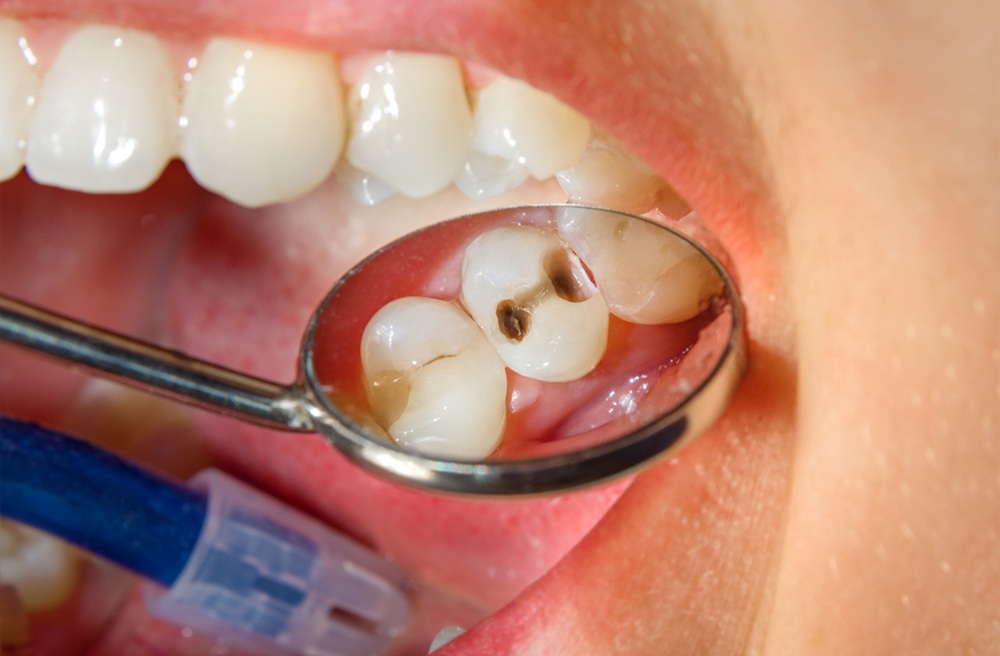

Finding a cavity on your front tooth can feel like a punch to the gut — especially since it’s the first thing people see when you smile. The good news? Front tooth cavities are very treatable, and when caught early, fixing them is simpler than most people expect. A cavity on a front tooth is a form of tooth decay caused by bacteria eroding the enamel, and it can appear as a white spot, brown discoloration, or in more advanced cases, a visible hole.
Unlike back teeth that are mostly hidden, front tooth cavities carry both a dental and cosmetic concern. But here’s the thing — waiting makes both problems worse. The earlier you catch it, the easier and cheaper the fix. Let’s walk through everything you need to know.
Can Front Teeth Really Get Cavities?
A lot of people assume cavities are mainly a back-tooth problem. It makes sense — molars do most of the chewing and tend to trap more food. But front teeth are absolutely not immune.
In fact, front teeth face their own set of risks. They’re constantly exposed to sugary drinks, acidic foods, and the bacteria that thrive on both. The inner surfaces and the tight spaces between front teeth are areas that brushing often misses, making them surprisingly vulnerable to decay.
Every tooth — front or back — is made up of three layers:
- Enamel — the hard outer shell
- Dentin — the softer layer underneath
- Pulp — the innermost part containing nerves and blood vessels
When bacteria produce acid that eats through enamel, a cavity forms. On front teeth, this process is just as possible — and sometimes progresses faster because people don’t realize it’s happening until it becomes visible.
What Does a Cavity on a Front Tooth Look, Feel, and Smell Like?
This is usually the first question people have — and for good reason. Knowing what to look for can mean the difference between a simple filling and a root canal.
Symptoms vary depending on how far the decay has progressed. Here’s a clear breakdown:
| Stage | What You See | What You Feel | Other Signs |
|---|---|---|---|
| Early | White or chalky spot on tooth surface | No pain, maybe mild sensitivity | None |
| Moderate | Brown or yellowish discoloration | Sensitivity to cold, sweet foods | Tooth may look dull |
| Advanced | Visible dark spot or small hole | Noticeable pain, sensitivity to hot & cold | Bad breath, taste of decay |
| Severe | Large hole, visible damage | Constant or throbbing pain | Swelling, possible abscess |
One thing worth knowing — early cavities on front teeth often show up as a white spot first. Many people mistake this for a stain or just “how their teeth look.” That white spot is actually demineralization — the very beginning of enamel breakdown. Catching it at this stage can sometimes mean no drilling at all.
What Causes a Cavity on a Front Tooth?
Tooth decay doesn’t happen overnight. It builds up gradually, and several factors can make front teeth particularly susceptible.
Poor Brushing Habits The front teeth — especially along the gum line and the backs of the upper front teeth — are areas people often rush through. A quick two-second brush doesn’t cut it for these surfaces.
High Sugar and Acidic Diet Sodas, juices, sports drinks, citrus fruits, and candies are among the biggest culprits. These either feed bacteria directly or weaken enamel through acid erosion, leaving teeth exposed.
Dry Mouth Saliva is your mouth’s natural defense system. It neutralizes acids and washes away bacteria. People with chronic dry mouth — whether from medication, breathing through their mouth, or dehydration — lose that protection.
Mouth Breathing Breathing through the mouth dries out the front teeth specifically, since they’re the most exposed. This is why mouth breathers often develop front tooth decay faster than others.
Damaged or Thin Enamel Some people are born with thinner enamel. Others develop enamel erosion over time from acidic diets or acid reflux. Either way, weakened enamel means less protection against bacteria.
| Cause | Who’s Most at Risk |
|---|---|
| High sugar diet | Children, teens, frequent soda drinkers |
| Dry mouth | Elderly, medication users, diabetics |
| Mouth breathing | People with allergies, deviated septum |
| Poor brushing | Anyone rushing their routine |
| Acid reflux | Adults with GERD |
| Thin enamel | Genetic predisposition, bulimia history |
Cavity Between Front Teeth — A Special Case
This deserves its own section because it’s one of the most commonly missed types of decay.
Cavities that form between the two front teeth (called interproximal decay) are nearly impossible to see with the naked eye — even in a mirror. They develop in the contact point where the two teeth touch, hidden from view.
You typically won’t feel anything unusual until the decay has spread. By then, what could have been a small filling has grown into something more involved.
The only reliable way to detect this type of cavity early is through dental X-rays — which is precisely why skipping your regular checkups is such a risk. A dentist can spot these cavities on an X-ray long before they become painful or visible.
They also tend to spread faster in that area because the space between teeth traps food and bacteria consistently, and flossing is the only thing that really cleans it out.
Treatment Options for Front Tooth Cavities
Treatment depends entirely on how far the decay has gone. The earlier the stage, the simpler the solution.
Fluoride Treatment For very early-stage cavities (white spot lesions), professional fluoride application can sometimes stop and even reverse the decay. No drilling, no filling — just remineralization of the enamel. This only works in the earliest stage.
Composite Resin Filling This is the most common treatment for front tooth cavities. A tooth-colored composite resin is applied directly to the tooth after removing the decayed portion. It blends naturally with the tooth, making it virtually invisible — which matters a lot for a front tooth.
Dental Bonding For cavities that have caused some cosmetic damage, bonding uses the same composite resin but sculpted more artistically to restore the tooth’s shape and appearance. It’s fast, usually done in one visit, and effective.
Porcelain Veneer When decay has caused noticeable cosmetic damage or discoloration, a veneer may be recommended. It covers the front surface of the tooth entirely. More expensive, but delivers excellent aesthetic results.
Root Canal + Crown If the cavity has reached the pulp — the innermost layer containing nerves — a root canal becomes necessary. After the root canal, a crown is placed over the tooth for protection. For front teeth, ceramic or porcelain crowns are used so they match naturally.
| Cavity Stage | Recommended Treatment | Approx. Sessions Needed |
|---|---|---|
| Very Early (white spot) | Fluoride treatment | 1 |
| Early–Moderate | Composite filling | 1 |
| Moderate with cosmetic damage | Bonding or veneer | 1–2 |
| Severe (reaching pulp) | Root canal + crown | 2–3 |
What to Expect at the Dentist
If you’ve never had a filling on a front tooth before, knowing what happens can ease the nerves significantly.
Step 1 — Examination & X-ray Your dentist examines the tooth and likely takes an X-ray to assess how deep the decay goes.
Step 2 — Local Anesthesia A numbing injection is given near the tooth. Yes, there’s a small pinch, but once it kicks in, you won’t feel the drilling.
Step 3 — Removing the Decay A dental drill removes the decayed portion of the tooth. For front teeth, dentists are especially careful to preserve as much natural tooth structure as possible.
Step 4 — Filling Placement The composite resin is applied in layers, each hardened with a UV light. The dentist carefully matches the shade to your natural tooth color.
Step 5 — Shaping and Polishing The filling is shaped and polished until it sits flush with your bite and looks seamless.
The whole process usually takes 30 to 60 minutes. Most people are surprised by how straightforward it is.
How Much Does It Cost to Fix a Front Tooth Cavity?
Cost is often the reason people delay — so here’s a realistic picture.
| Treatment | Estimated Cost (Without Insurance) | With Insurance |
|---|---|---|
| Fluoride treatment | $20 – $50 | Often covered |
| Composite filling | $150 – $300 per tooth | Partially covered |
| Dental bonding | $300 – $600 per tooth | Rarely covered |
| Porcelain veneer | $900 – $2,500 per tooth | Usually not covered |
| Root canal (front tooth) | $700 – $1,200 | Partially covered |
| Crown (porcelain) | $1,000 – $1,800 | Partially covered |
Dental insurance typically covers basic fillings partially or fully. More cosmetic-leaning treatments like veneers are usually out-of-pocket. Always ask your dentist for a treatment plan estimate before committing.
How to Prevent Cavities on Front Teeth
Prevention is genuinely the easiest path here. A few consistent habits go a long way.
Brush Properly — Not Just Quickly Hold your toothbrush at a 45-degree angle to the gum line. Spend time on the backs of your upper front teeth, which most people completely ignore.
Floss Between Your Front Teeth Daily This is non-negotiable. The contact points between front teeth trap bacteria that brushing simply cannot reach.
Cut Back on Acidic Drinks If you drink soda, juice, or sports drinks frequently, try using a straw to minimize contact with front teeth. Rinse with water afterward.
Use Fluoride Toothpaste Fluoride actively strengthens enamel and helps reverse very early mineral loss. It’s one of the most proven cavity prevention tools available.
Stay Hydrated Drinking water throughout the day keeps saliva flowing, which neutralizes acid and protects your enamel naturally.
| Do | Don’t |
|---|---|
| Brush twice daily for 2 minutes | Brush aggressively — it erodes enamel |
| Floss between front teeth daily | Skip flossing because “nothing feels stuck” |
| Drink water after sugary drinks | Brush immediately after acidic food (wait 30 min) |
| Visit your dentist every 6 months | Delay checkups because there’s no pain |
| Use fluoride toothpaste | Use whitening products excessively |
When Should You See a Dentist Immediately?
Some signs mean you shouldn’t wait for your next scheduled appointment.
- You notice a dark spot or visible hole on a front tooth
- You have pain when biting into food
- Sensitivity that lingers for more than a few seconds after eating something cold or sweet
- Any swelling around the gum near a front tooth
- A persistent bad taste in your mouth near a specific tooth
These can indicate the cavity has progressed into dentin or pulp territory — and at that point, time really does matter.
FAQs
Can a front tooth cavity heal on its own? Only in the very earliest stage — when it’s just a white spot and no actual hole has formed. At that point, fluoride and improved oral hygiene can sometimes reverse the damage. Once the enamel has broken down and a cavity has formed, it cannot heal itself and needs professional treatment.
How fast does a front tooth cavity progress? It varies. A cavity can take months or even years to develop from an early white spot to a visible hole. However, once past the enamel into dentin, progression speeds up noticeably because dentin is softer and less resistant.
Can kids get cavities on front teeth? Yes — very commonly. Baby bottle tooth decay is a well-known condition where infants and toddlers develop cavities on upper front teeth from prolonged exposure to milk, formula, or juice. Children’s front teeth need just as much care as their back teeth.
Is a composite filling on a front tooth permanent? Not entirely. Composite fillings on front teeth typically last 5 to 10 years before they may need replacement or touch-up. They can chip or discolor over time, especially with heavy coffee, tea, or wine consumption.
Conclusion
A cavity on a front tooth is genuinely nothing to panic about — but it is something to act on. Caught early, it’s a quick, affordable, and nearly invisible fix. Left alone, it turns into something far more complicated, more expensive, and potentially more painful.
The most important thing you can do right now is get it checked. Even if you’re not sure it’s a cavity — even if it’s just a white spot you noticed last week — a dentist can tell you exactly what’s happening and what, if anything, needs to be done.