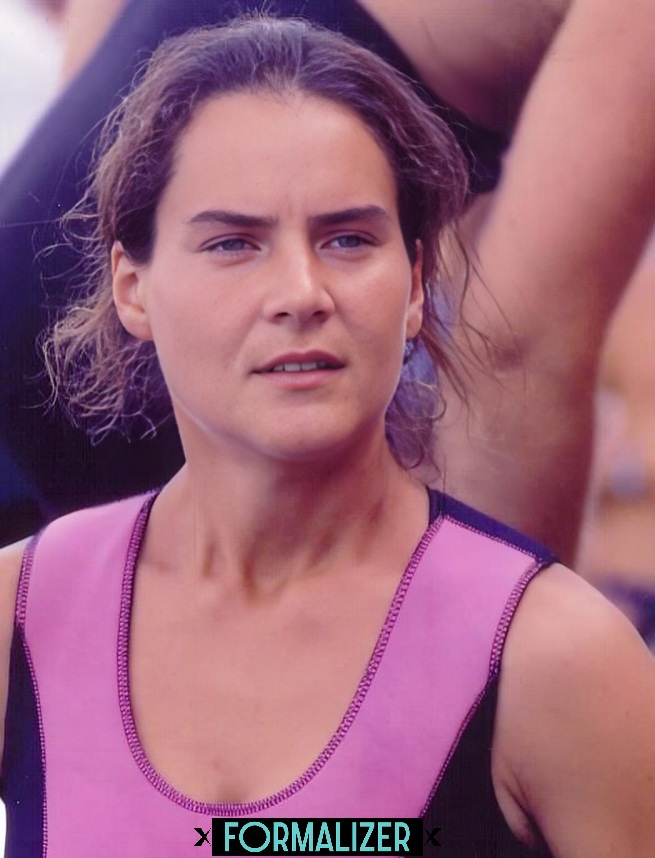

Some athletes are defined by their records. Others are defined by something harder to measure — a relationship with their sport so deep and genuine that it becomes inseparable from who they are as a person. Rossana Maiorca was both.
She was an Italian freediver who set multiple world records in breath-hold diving across different disciplines, competed internationally from the late 1970s through the early 1990s, and helped reshape what women could achieve in one of the most demanding sports on earth. Born into a family already famous for the sea, she didn’t simply inherit a legacy — she built one entirely her own.
Rossana Maiorca was born on 23 February 1960 and passed away on 7 January 2005, aged 45, following a battle with cancer. In the years between, she gave the sport of freediving some of its most important female milestones.
Who Was Rossana Maiorca?
Rossana was an Italian professional freediver, world record holder, and one of the most significant female athletes in the history of competitive breath-hold diving. She grew up in Syracuse, Sicily, in a household where the sea wasn’t a hobby — it was a way of life.
Her father was Enzo Maiorca, one of the most celebrated freedivers in history. Her sister Patrizia was also a competitive freediver of serious accomplishment. The Maiorca name, by the time Rossana began competing, already carried enormous weight in Italian underwater sports. She carried it further.
| Detail | Information |
|---|---|
| Full Name | Rossana Maiorca |
| Date of Birth | 23 February 1960 |
| Birthplace | Syracuse, Sicily, Italy |
| Nationality | Italian |
| Sport | Freediving (breath-hold diving) |
| Active Years | Late 1970s – mid 1990s |
| Date of Death | 7 January 2005 |
| Cause of Death | Cancer |
| Place of Death | Mestre, Venice, Italy |
| Age at Death | 45 |
Growing Up Maiorca — A Family Built on the Sea
To understand Rossana, you have to understand where she came from — and that means understanding the world she was born into.
Syracuse, on the southeastern tip of Sicily, is a city shaped by the Mediterranean. The water is everywhere — in the light, in the culture, in the daily rhythms of life. For the Maiorca family, it was also a professional arena.
Rossana’s father Enzo had already made the family name synonymous with depth and endurance long before she began competing. Her sister Patrizia dived alongside her, and the two sisters trained together, competed against the world’s best, and pushed each other in ways only siblings can.
From a young age, Rossana combined swimming with other physical disciplines — gymnastics helped develop body control, and structured breath-hold training built the lung capacity she would eventually use to reach extraordinary depths. Her preparation was rigorous and methodical, shaped by a family that understood the demands of elite freediving from direct experience.
She didn’t grow up watching the sea from a distance. She grew up inside it.
Enzo Maiorca — The Legend Behind the Name
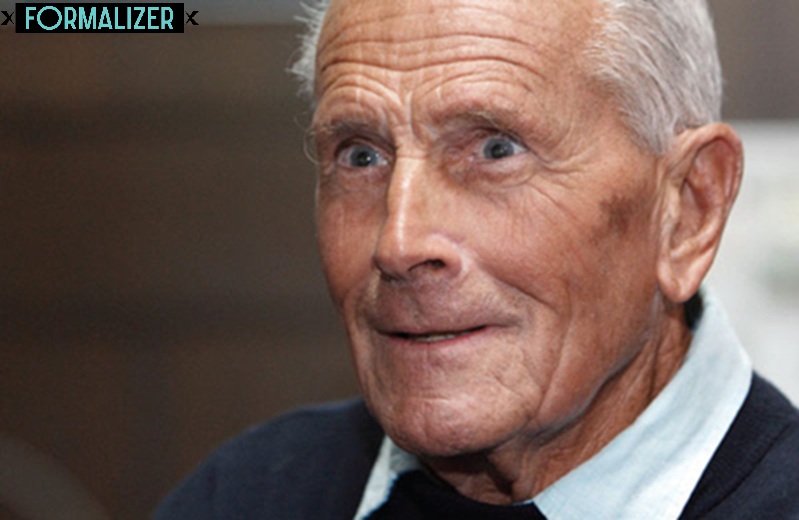
It’s impossible to write about Rossana without spending time on her father — not because she lived in his shadow, but because understanding him helps explain the environment that produced her.
Enzo Maiorca, born in Syracuse on 21 June 1931, was known across Italy and internationally as the “Lord of the Abysses.” He learned to swim at age four, reportedly despite a genuine fear of the sea — a detail that makes his eventual career almost poetically ironic. By the late 1950s, he was chasing world records in breath-hold diving with a determination that bordered on obsessive.
In 1960, he defeated Brazilian diver Amerigo Santarelli by reaching 45 metres underwater — a major milestone in the sport. His rivalry with French freediver Jacques Mayol became one of the defining sporting stories of that era, a battle of two very different men united by the same impossible pursuit of depth.
That rivalry was dramatic enough to inspire the 1988 Luc Besson film The Big Blue — one of the most celebrated diving films ever made. The character of Enzo Molinari, played by Jean Reno, was based on Enzo Maiorca. The film was not actually shown in Italy until 2002, because Enzo objected to the portrayal for years. After the death of his great rival Jacques Mayol in 2001, he finally relented.
In 1988 — the same year The Big Blue was released — Enzo set his final world record of 101 metres. He later entered politics, serving in the Italian Senate for Alleanza Nazionale from 1994 to 1996. He passed away on 13 November 2016, aged 85.
This was the man Rossana grew up watching, learning from, and — in her own way — following into the deep.
Rossana’s Freediving Career — Discipline by Discipline
Freediving, at its competitive core, is about how deep or how far a human being can go underwater on a single breath. No scuba tanks, no breathing apparatus — just the body, the water, and the lungs.
It sounds simple. It is anything but.
There are several competitive disciplines, each with different rules and physical demands. Rossana competed across multiple formats and set world records in more than one — which speaks to the breadth of her athletic ability, not just her depth.
Constant Weight is the discipline where the athlete descends and ascends using only fin propulsion or body movement, without changing the weight they carry. It demands both physical strength and extraordinary breath control. This was where Rossana made some of her earliest marks.
Variable Weight allows the diver to use a weighted sled to descend faster, then ascend under their own power. Depths reached in this discipline tend to be greater.
Dynamic Apnea measures horizontal distance covered underwater on a single breath — a different kind of endurance challenge entirely.
Monofin diving uses a single fin attached to both feet rather than two separate fins — a technique that generates more power and became increasingly important in competitive freediving during the 1980s and 1990s.
Rossana was one of the pioneering women in monofin competition, and her 1989 achievement in that discipline was a landmark moment for the sport.
| Year | Discipline | Achievement | Location |
|---|---|---|---|
| 1979 | Constant Weight | –40 metres world record | — |
| 1980 | Constant Weight | –45 metres world record | — |
| 1989 | Monofin (Single Fin) | First women’s world record | Syracuse |
| 1990 | Constant Weight | –55 metres world record | Syracuse |
| 1991 | Constant Weight | –56 metres world record | — |
| 1992 | Constant Weight | –58 metres world record | — |
| 1996 | Dynamic Apnea | 125 metres world record | Italy |
Each of those numbers represents a breath held, a body pushed, a boundary moved. Over nearly two decades of competition, Rossana moved that boundary repeatedly.
The 1989 Milestone — First Monofin World Record
Among all her achievements, the 1989 monofin record deserves particular attention.
In Syracuse — the city of her family, the water she had known since childhood — Rossana became the first woman to set a world record in single-fin freediving. It was a technical milestone as much as an athletic one.
The monofin generates significantly more propulsion than two separate fins, allowing divers to reach greater depths more efficiently. But using it effectively requires a completely different technique — a dolphin-kick movement that demands precise body alignment, flexibility, and timing. It’s a skill that takes years to develop.
By setting the first women’s world record in this discipline, Rossana didn’t just achieve a personal milestone. She helped open a new chapter in women’s competitive freediving at a technical level, demonstrating that female athletes could master the monofin and push its possibilities just as far as their male counterparts.
It happened in Syracuse. It couldn’t really have happened anywhere else.
The Dolphin Story — An Ocean Hero Moment
Records and statistics tell one part of Rossana’s story. But there is another moment — quieter, more human, and in many ways more revealing — that has become part of her legend.
While the Maiorca family was diving in the Mediterranean, Enzo was in the water preparing to dive when he felt something nudge his back. He turned to find a male dolphin. The animal seemed agitated, insistent — beckoning him to follow.
Enzo dived after the dolphin. About 40 feet down, the animal led him to its mate, a pregnant female dolphin who had become entangled in a fishing net and was close to drowning.
Enzo surfaced immediately, grabbed diving knives, and went back down — this time with Rossana and Patrizia alongside him. Together, the three of them cut the dolphin free and helped her reach the surface. Shortly afterward, the dolphin gave birth.
It’s the kind of story that sounds too perfect to be real. But it is real, documented and recounted by the family themselves. And it says something important about the Maiorcas — they didn’t just use the sea for sport. They respected it, protected it, and felt genuinely responsible for what lived in it.
That relationship with the ocean was woven into everything Rossana stood for.
Rossana and the Fight for Women in Freediving
When Rossana began competing in the late 1970s, women’s freediving was not well-established as a serious competitive discipline. The sport’s public face was almost exclusively male — her father’s generation had set that template.
Rossana and Patrizia helped change it. Not through activism or campaigns, but through the simple, undeniable fact of performance. When women are setting world records, the conversation about whether women belong in a sport tends to become much shorter.
Over the course of her career, Rossana broke depth barriers that many believed women couldn’t reach. She competed on equal terms with the world’s best female freedivers and consistently came out ahead. She trained with the same rigour, faced the same physical demands, and accepted the same risks as any male athlete in the sport.
Her legacy in this respect goes beyond any single record. By being present, by competing, and by winning at the highest level across multiple decades, she helped establish women’s freediving as a legitimate and respected discipline in its own right. Athletes who came after her — and who push the sport’s boundaries today — owe something to the groundwork she laid.
Personal Life
Away from competition, Rossana built a quieter life. She married and moved to Mestre — the mainland part of the municipality of Venice — where she raised two children.
Details of her private life remain largely that — private. She was not a celebrity in the modern sense, and she didn’t seek the spotlight beyond her sporting achievements. After stepping back from active competition in the mid-1990s, she focused on family and on life in Mestre, far from the Sicilian coastline where her career had been forged.
Her sister Patrizia remained connected to the sea in a different way — through conservation and environmental work. Her father Enzo moved into politics and media. Each of the Maioicas found their own path after the competitive years ended.
For Rossana, the path led inward — toward family, toward quieter waters, toward a life built around the people she loved.
Illness and Death
In her mid-40s, Rossana was diagnosed with cancer. The specific type has never been publicly confirmed, and the family has kept those details private — a choice that deserves respect.
She passed away on 7 January 2005 in Mestre, aged 45.
The freediving world mourned her deeply. She was not an old woman, not a retired figure from a distant era — she was 44 years old, a mother, a sister, a daughter, a woman who had spent her life pushing human limits and had simply run out of time too soon.
Her father Enzo, who outlived her by eleven years, described her passing as the greatest loss of his life. That says everything.
Legacy and Honours
The honours that have followed Rossana’s death are a measure of what she meant — to the sport, to Sicily, and to the people who knew her work.
The Mermaid of Sicily Statue In 2008, sculptor Pietro Marchese created a golden statue of Rossana, named the “Sirena di Sicilia” (Mermaid of Sicily), installed in the underwater area of Gli Archi near the Plemmirio marine reserve in Syracuse. It sits beneath the surface of the sea she loved — visible to divers, invisible to those who stay above the water. It is, in its way, a perfect memorial. Freedivers travel to Syracuse specifically to see it and photograph themselves beside it.
Tridente d’Oro Rossana was posthumously awarded the Tridente d’Oro — one of freediving’s most prestigious honours — in recognition of her contributions to the sport. It is given to those who have made a lasting impact on freediving’s history and development.
The Cycling Path A cycling path in Syracuse — Pista Ciclabile Rossana Maiorca — was named in her honour, connecting her memory to the city and coastline where her story began.
Premio di Laurea “Maiorca” In 2026, an academic prize named after both Rossana and her father Enzo was established to encourage young scholars to advance research in marine biology, ocean conservation, and environmental science. It is a living legacy — one that connects her name to the future of the sea she devoted her life to protecting.
| Honour | Year | Details |
|---|---|---|
| Sirena di Sicilia Statue | 2008 | Underwater statue at Plemmirio, Syracuse |
| Tridente d’Oro | 2015 | Posthumous award for contribution to freediving |
| Cycling Path | — | Pista Ciclabile Rossana Maiorca, Syracuse |
| Premio di Laurea “Maiorca” | 2026 | Academic prize for marine/environmental research |
The Maiorca Family Legacy Today
The Maiorca name didn’t end with Rossana — or even with Enzo.
Patrizia Maiorca, Rossana’s sister, continued her connection to the sea through environmental conservation rather than competition. She became president of the Plemmirio Marine Protected Area near Syracuse — the same waters where her family dived for decades — and has dedicated significant effort to protecting the marine ecosystem of that coastline.
Enzo Maiorca lived until November 2016, passing away at 85. He had seen his daughters compete, watched his sport grow from a niche pursuit to an internationally recognised discipline, outlived his great rival Jacques Mayol by fifteen years, and — most painfully — outlived his daughter Rossana by eleven.
The collective contribution of this family to Italian diving culture, environmental awareness, and the global profile of freediving is genuinely remarkable. No other family in the sport’s history has produced three world-class competitive freedivers from the same household.
| Family Member | Role | Notable For |
|---|---|---|
| Enzo Maiorca | Freediver, politician | World records, “Lord of the Abysses,” The Big Blue inspiration |
| Rossana Maiorca | Freediver | Multiple world records, first women’s monofin record |
| Patrizia Maiorca | Freediver, conservationist | Competitive records, president of Plemmirio Marine Reserve |
FAQs
How did Rossana Maiorca die? Rossana Maiorca passed away on 7 January 2005 in Mestre, Venice, aged 45. The cause of death was cancer, though the specific type was never publicly disclosed.
What records did Rossana Maiorca hold? She held multiple world records across freediving disciplines, including constant weight depth records from –40 metres (1979) to –58 metres (1992), the first women’s monofin world record in Syracuse (1989), and a 125-metre dynamic apnea record in 1996.
Who was Enzo Maiorca? Enzo Maiorca was Rossana’s father, a legendary Italian freediver nicknamed the “Lord of the Abysses.” He set multiple world depth records from the late 1950s through 1988 and was the inspiration for the character Enzo Molinari in Luc Besson’s 1988 film The Big Blue. He passed away in November 2016 aged 85.
What is the Mermaid of Sicily statue? The Sirena di Sicilia is a golden underwater statue of Rossana Maiorca created by sculptor Pietro Marchese in 2008. It is installed in the sea near the Plemmirio marine reserve in Syracuse and has become a significant landmark for freedivers who visit Sicily.
Did Rossana Maiorca appear in The Big Blue? No — The Big Blue (1988) was a fictional film inspired by the rivalry between her father Enzo and French freediver Jacques Mayol. Rossana herself did not appear in it.
Conclusion
Rossana Maiorca lived 45 years. In those years she dived deeper than almost any woman before her, helped establish female freediving as a serious competitive discipline, saved a pregnant dolphin from a fishing net with her family, raised two children, and left behind a statue resting on the floor of the Mediterranean Sea.
That is not a small life. That is a remarkable one.
She came from a family that understood the ocean in ways most people never will — not as a backdrop or a holiday destination, but as something alive, demanding, and worthy of genuine respect. She carried that understanding into every dive she made.
The records will always be there in the history books. But the real legacy is something less tangible — the doors she opened for women in the water, the way she showed that depth and grace can coexist in the same person, and the memory of a Sicilian girl who followed her father into the deep and came back with something entirely her own.